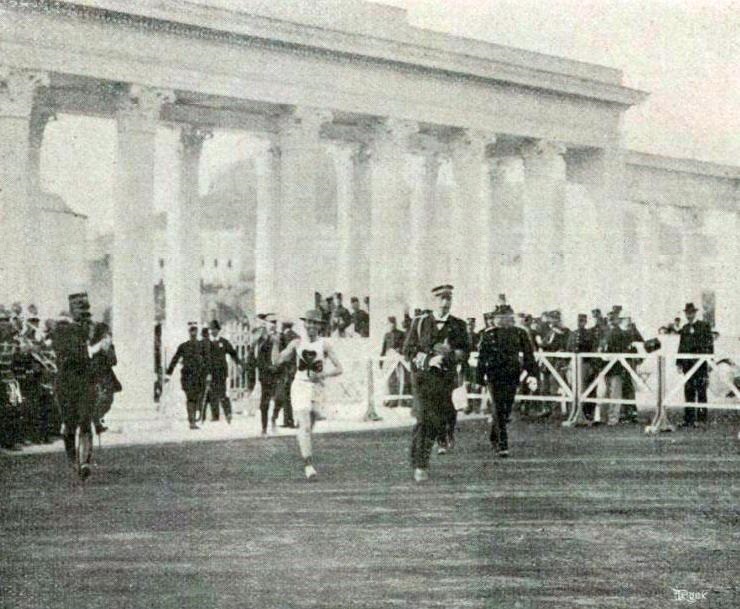
Sunday, 22 April 2012
Those Intercalated Games


Thursday, 19 April 2012
A Library in a Church
 Here's another unexpected Quebec find. We stumbled on this church, sensitively converted into a public library - two of my favourite things in one, churches and libraries! - while looking for the Protestant Graveyard (which turned out to be closed). Once serving as the church of St Matthew, it is now the St Jean-Baptiste public library, but the original building and its furnishings still seem to be quite intact - which is a good thing, as this church was inspired by St Oswald's in Liverpool, an important early creation of Pugin's, of which nothing now remains save the tower. The craftsmanship on display inside St Matthew's/St Jean Baptiste is very impressive, from the beautifully carved wooden rood screen to the elegant arcade and the fine metalwork of the lamps and the splendid font cover suspended from the baldachin that can be seen in the picture. I wish there were more images of this fine Gothic church, but sadly I can't find any...
The Camberwell Beauty...
is also the name of one of V.S. Pritchett's best-known (and best) short stories. And it was short stories I was reading on my Canadian jaunt - not Pritchett's but those of the Canadian writer Alice Munro.
For some reason, it has taken me all this time to finally get round to reading Alice Munro - perhaps I was put off by the sheer volume of praise for her 'practically perfect' work, or by the fact that she won the 2009 International Man Booker Prize (for which, if I remember rightly, the rest of the shortlist consisted of writers I don't much care for). But she had been recommended to me more than once by people whose judgment I generally trust, so it's odd that I've only just read my first Munro.
It was a volume of short stories called Hateship, Friendship, Courtship, Loveship, Marriage - and all I can say is that Yes, she fully deserves all that praise. I found these stories of small-town life in Ontario almost as richly rewarding as Pritchett's, or even Chekhov's - they're that good. And they're good in unexpected ways, taking you into unexpected places by unpredictable routes. A lot of the time, in a typical Munro story, you really don't know where it's going, what will happen next, what manner of story it is. Her characters are walk-off-the-page vivid, and her plots are constructed with masterly ingenuity under an surface of easy artlessness. Most of the stories in Hateship, Friendship are told in the first person, or through a first-person proxy, and Munro is unusual in extending her clear-eyed vision to her fictional 'self', who is often far from the conventional 'nice', sensitive narrator of most writers' short stories. Though she paints on a small canvas, Munro is wonderfully free of the emotional correctness that drains the life out of so much contemporary fiction. But what is most striking about her stories is their richness and density. With the best of them, you get the feeling that two or three novels could be made out of the leftovers. Worlds of fictional possibility open up, only to close again as the story incorporates them and moves on. For example, in the title story of the collection I read (which is told more entirely from 'outside' than any of the others), there's a short scene in a dress shop which not only fills out the picture of the main character, Johanna (who is buying her first-ever smart dress as she believes she is soon to be married to a man who in fact barely knows her), but also takes us into another life, that of the woman who owns the dress shop, who initially comes over as haughty and unsympathetic...
'I'm here all day,' she said. 'And sometimes I just wonder what I think I'm doing. I ask myself, What do you think you're doing here? I put up my new display in the window and I do this and that to entice people in, but there are days - there are days - when I do not see one soul come in that door. I know - people think these clothes are too expensive - but they're good. They're good clothes. If you want the quality you have to pay the price.'
'They must come in when they want something like those,' said Johanna, looking towards the evening dresses. 'Where else could they go?'
'That's just it. They don't. They go to the city - that's where they go. They'll drive fifty miles, a hundred miles, never mind the gas, and tell themselves that way they get something better than I've got here. And they haven't. Not better quality, not better selection. Nothing. Just that they'd be ashamed to say they bought their wedding outfits in town. Or they'll come in and try something on and say they have to think about it. I'll be back, they say. And I think, Oh yes, I know what that means. It means they'll try to find the same thing cheaper in London [Ontario] or Kitchener, and even if it isn't cheaper, they'll buy it once they've driven all that way and got sick of looking.
'I don't know,' she said. 'Maybe if I was a local person it would make a difference. It's very clique-y here, I find. You're not local, are you?'
Johanna said, 'No.'
'Don't you find it clique-y?'
Cleeky.
'Hard for an outsider to break in, is what I mean.'
'I'm used to being on my own,' Johanna said.
'But you found somebody. You won't be on your on your own anymore and isn't that lovely? Some days I think how grand it would be, to be married and stay at home. Of course, I used to be married, and I worked anyway. Ah, well. Maybe the man in the moon will walk in here and fall in love with me and then I'll be all set!'
In one page of outwardly ordinary dialogue, a whole sad thwarted life opens up before us. And that is the last we see or hear of the dress shop owner. Writing like that is indeed, I reckon, 'practically perfect'.
For some reason, it has taken me all this time to finally get round to reading Alice Munro - perhaps I was put off by the sheer volume of praise for her 'practically perfect' work, or by the fact that she won the 2009 International Man Booker Prize (for which, if I remember rightly, the rest of the shortlist consisted of writers I don't much care for). But she had been recommended to me more than once by people whose judgment I generally trust, so it's odd that I've only just read my first Munro.
It was a volume of short stories called Hateship, Friendship, Courtship, Loveship, Marriage - and all I can say is that Yes, she fully deserves all that praise. I found these stories of small-town life in Ontario almost as richly rewarding as Pritchett's, or even Chekhov's - they're that good. And they're good in unexpected ways, taking you into unexpected places by unpredictable routes. A lot of the time, in a typical Munro story, you really don't know where it's going, what will happen next, what manner of story it is. Her characters are walk-off-the-page vivid, and her plots are constructed with masterly ingenuity under an surface of easy artlessness. Most of the stories in Hateship, Friendship are told in the first person, or through a first-person proxy, and Munro is unusual in extending her clear-eyed vision to her fictional 'self', who is often far from the conventional 'nice', sensitive narrator of most writers' short stories. Though she paints on a small canvas, Munro is wonderfully free of the emotional correctness that drains the life out of so much contemporary fiction. But what is most striking about her stories is their richness and density. With the best of them, you get the feeling that two or three novels could be made out of the leftovers. Worlds of fictional possibility open up, only to close again as the story incorporates them and moves on. For example, in the title story of the collection I read (which is told more entirely from 'outside' than any of the others), there's a short scene in a dress shop which not only fills out the picture of the main character, Johanna (who is buying her first-ever smart dress as she believes she is soon to be married to a man who in fact barely knows her), but also takes us into another life, that of the woman who owns the dress shop, who initially comes over as haughty and unsympathetic...
'I'm here all day,' she said. 'And sometimes I just wonder what I think I'm doing. I ask myself, What do you think you're doing here? I put up my new display in the window and I do this and that to entice people in, but there are days - there are days - when I do not see one soul come in that door. I know - people think these clothes are too expensive - but they're good. They're good clothes. If you want the quality you have to pay the price.'
'They must come in when they want something like those,' said Johanna, looking towards the evening dresses. 'Where else could they go?'
'That's just it. They don't. They go to the city - that's where they go. They'll drive fifty miles, a hundred miles, never mind the gas, and tell themselves that way they get something better than I've got here. And they haven't. Not better quality, not better selection. Nothing. Just that they'd be ashamed to say they bought their wedding outfits in town. Or they'll come in and try something on and say they have to think about it. I'll be back, they say. And I think, Oh yes, I know what that means. It means they'll try to find the same thing cheaper in London [Ontario] or Kitchener, and even if it isn't cheaper, they'll buy it once they've driven all that way and got sick of looking.
'I don't know,' she said. 'Maybe if I was a local person it would make a difference. It's very clique-y here, I find. You're not local, are you?'
Johanna said, 'No.'
'Don't you find it clique-y?'
Cleeky.
'Hard for an outsider to break in, is what I mean.'
'I'm used to being on my own,' Johanna said.
'But you found somebody. You won't be on your on your own anymore and isn't that lovely? Some days I think how grand it would be, to be married and stay at home. Of course, I used to be married, and I worked anyway. Ah, well. Maybe the man in the moon will walk in here and fall in love with me and then I'll be all set!'
In one page of outwardly ordinary dialogue, a whole sad thwarted life opens up before us. And that is the last we see or hear of the dress shop owner. Writing like that is indeed, I reckon, 'practically perfect'.
The Grand Surprise
 My week in Canada was wonderful in all manner of ways, but the most completely unexpected wonder was my first encounter with the butterfly we in Britain know as the Camberwell Beauty (the name that won out over its splendid alternative naming, The Grand Surprise). In North America, the Beauty goes by the name of the Mourning Cloak, at once poetic and descriptive.
 We were walking, all six of us, on a morning of intermittent sunshine but not much warmth, on Mount Royal, the great hill (or mountain, as they call it) that dominates the city, and provides a welcome retreat from the city streets. Laid out as a 'wild park' by the great Frederick William Olmsted, creator of New York's Central Park, Mount Royal beautifully embodies his ideal of creating a park that is the nearest possible thing to a natural environment. Mostly we followed Chemin Olmsted, the easiest ascent to the summit, rising gently through grand steep woods, but at one point - near the manmade lake (not part of Olmsted's plan, but it works) - we turned off on a narrower path through scattered woods. My son and I were enjoying the antics of a small woodpecker (very much like our own Lesser-Spotted or Barred Woodpecker) and a tiny nuthatch-lke bird, when there was an excited call from the group ahead, urging us to hurry to where they were. And there, on the bare dry earth, was a Camberwell Beauty, its wings fully spread, as if basking, though there was no sun.
This was a breathtaking moment - the Camberwell Beauty is of course a great rarity in Britain, and I never expected to see one. Least of all on a far from balmy April day in the city of Montreal, when there were still patches of unmelted snow on the ground (and great grey heaps of it in odd places where it had been piled high). This glorious specimen showed little inclination to move and I was able to admire it very close up. It did not disappoint; it is a Beauty indeed, with its velvety chocolate/black/deepest red wings fringed by blue eyelets and a creamy skirt, in places just a little tattered. I almost succeeded in getting her to climb onto my finger - four legs were on before she had second thoughts, flew off surprisingly strongly into the trees, and was gone.
Of course, over the coming days, I discovered that the Mourning Cloak is - at least in this part of Canada - roughly the equivalent of our Red Admiral, the butterfly you're most likely to see, almost anywhere, on those early spring days when little or nothing else is flying. I spotted half a dozen more, in Montreal and Quebec cities, before the week was out, but all were in strong flight, and nothing could ever top that first magical close-up encounter.
There's a poem by May Swenson, Unconscious Came A Beauty, that evokes an even closer encounter. Like George Herbert's Easter Wings, it's a 'pattern poem' in winged form. Follow the link here to enjoy it. Surely it's a Mourning Cloak she's writing about, rather than a Red Spotted Purple. 'Tomb-stained' is beautifully descriptive of the Camberwell Beauty's underwings.
Monday, 9 April 2012
Hiatus
Tomorrow I am flying off to Canada to spend a week in Mount Royal (or Montreal as they call it these days) and Quebec with my beloved daughter, who is big with Number One Grandson. This is a delightful prospect, but it will mean a hiatus in the blog. I might slip another post in before I go, but it looks as if the busyness and complications are set to continue to the end. I shall be glad to be in the air, flying away... Normal service will resume around the middle of next week.
Sunday, 8 April 2012
Easter
 Happy Easter to all who browse here!
The past days have been ridiculously busy and complicated, but on Good Friday - sunny here - I went with Mrs Nige to admire a very fine bluebell wood near Box Hill. It was not quite at its peak of perfection, and the sunshine (which made it such a dazzling spectacle last year) was intermittent by now, but it was a beautiful sight, especially as this particular wood was also spangled with my favourite Wood Anemones, and the odd unexpected Cuckoo Flower standing among the Bluebells. A bluebell wood at this time of the year is famously one of the picturesque glories of England, subject of countless twee and sentimental paintings - in fact it seems to be a subject that cannot be painted without that twee sentimentality creeping in. It's a subject that's at once too easy and too hard - easy to make it look good, hard to make a real painting of it. Has anyone ever made a really good, let alone great, painting of a bluebell wood? I can't think of one... It's one of those subjects, I think, that's better fitted for the camera than the painter's brush.
As we descended towards the Denbies vineyard, we were hailed by a cheery fellow who was marking Good Friday by walking around with a 6ft cross over his shoulder (plywood by the look of it, cleverly perforated to reduce its weight). He was accompanied by a young boy who wished us a Happy Easter and proffered a basket full of Cadbury's caramel mini eggs. Hmm... As I remarked to Mrs N, 'What would Jesus do?'

Wednesday, 4 April 2012
Langham's Orwell
Remember Chris Langham? A prodigious comic talent, he wrote and starred in superior sitcoms Kiss Me Kate and Help and the brilliant mockumentary series People Like Us, was the sole British writer on The Muppet Show and the original star of The Thick Of It. In 2005, when he was at the height of his fame and winning all the awards going, he was arrested in connection with an investigation into internet child pornography; in 2007 he was found guilty of possessing indecent images; he served a prison sentence - and, since then, he has been a non-person. Don't expect to see anything with Langham in it (even as a voice only, as in People Like Us) repeated anywhere on the BBC, ever. It is as if Langham never existed.
This is terribly sad, and - while one can understand the BBC's reluctance to court the inevitable hysterical reaction - it's a shame that such an important figure in TV comedy has been effectively wiped from history. Happily there are fragments on YouTube, including parts of one of his most remarkable performances - not in a comedy but in a highly original documentary, George Orwell: A Life in Pictures, which blended archive material seamlessly with dramatised passages to create a warm and intimate portrait of the man. Langham's performance, with its edge of vulnerability, has something clownish about it which is unexpectedly effective, and affecting. Here's a taster (there's more on YouTube)...
Surprisingly, given his fame, there is no known sound recording of George Orwell's voice - which was surely a good deal more clipped than Langham's, but never mind.
This is terribly sad, and - while one can understand the BBC's reluctance to court the inevitable hysterical reaction - it's a shame that such an important figure in TV comedy has been effectively wiped from history. Happily there are fragments on YouTube, including parts of one of his most remarkable performances - not in a comedy but in a highly original documentary, George Orwell: A Life in Pictures, which blended archive material seamlessly with dramatised passages to create a warm and intimate portrait of the man. Langham's performance, with its edge of vulnerability, has something clownish about it which is unexpectedly effective, and affecting. Here's a taster (there's more on YouTube)...
Surprisingly, given his fame, there is no known sound recording of George Orwell's voice - which was surely a good deal more clipped than Langham's, but never mind.
Subscribe to:
Posts (Atom)
