After last year's dismal Washout Summer came the year of the Great Butterfly Summer - those glorious sunny months, preceded by a long hard winter and a cold wet spring, culminating in a Mast Year and followed by a wet and stormy early winter. I didn't get out among all that beautiful butterfly abundance as often as I'd hoped, but revelled in it whenever I could. My two most memorable butterfly encounters were with Small Blues in Dieppe and something utterly bizarre - a Monarch - in Carshalton.
On the literary front, I discovered the short stories of Peter Taylor, read David Lack's The Life of the Robin, Stefan Zweig's The World of Yesterday, and continued to delight in the works of Willa Cather and Ivy Compton-Burnett. Memorable re-reads included Keats and Embarrassment, Machine Dreams and The Real Life of Sebastian Knight - all at least as good as I remembered them.
I didn't do nearly as much gallery-going as I'd have liked, but caught an illuminating little Frederic Church exhibition and the breath-taking Barocci. Much more art and beauty came my way on an all too brief autumn visit to Venice,while a Norman jaunt also gifted me a memorable butterfly experience.
The real high points of my year were of course the birth of our granddaughter Summer and the February visit of our daughter and grandson Frankly Adorable Sam - but this is not a Family blog. What is seems to be becoming lately is something more like a Poetry blog. I've posted many more poems this year than ever before. This wasn't really planned, but I hope they have contributed to the great work of sharing some of life's pleasures, which is what this blog will always be about, if it's about anything.
Tuesday, 31 December 2013


Sunday, 29 December 2013
'The first and most direct thing in our experience'
'Something unknown is doing we don't know what.'
That succinct expression of how little we know was yesterday's epigraph on Frank Wilson's invaluable Books Inq. blog. It's a quotation from the eminent scientist and populariser of science Sir Arthur Eddington, born on yesterday's date in 1882. What's immediately striking about it - and about much else that Eddington said and wrote - is how unrecognisably different it sounds from anything that today's popularisers of science would utter.
Eddington became convinced - for reasons derived entirely from science - that 'the stuff of the world is mind-stuff'. What he called mind-stuff 'is not spread in space and time; these are part of the cyclic scheme ultimately derived out of it.... It is necessary to keep reminding ourselves that all knowledge of our environment from which the world of physics is constructed, has entered in the form of messages transmitted along the nerves to the seat of consciousness.... Consciousness is not sharply defined, but fades into subconsciousness; and beyond that we must postulate something indefinite but yet continuous with our mental nature.... It is difficult for the matter-of-fact physicist to accept the view that the substratum of everything is of mental character. But no one can deny that mind is the first and most direct thing in our experience, and all else is remote inference.'
This is in The Nature of the Physical World, published in 1928. Eddington was writing in the light of the shattering implications of quantum mechanics, which, it seemed to him, had not only made a nonsense of the materialist metaphysic that underlies science, but also of the dualistic distinction between a materialist and an idealist account of what reality is. He went further, arguing that whatever we observe must ultimately be the content of our own consciousness, therefore by definition non-material. He didn't go so far as to deny the objective reality of anything beyond our minds, but argued that the same 'stuff' is in our minds and the physical world and is what makes the connection of the two possible.
As I said, that's not the kind of talk you hear from the likes of Prof Brian Cox. But in his day Eddington was by no means alone among scientists in thinking in this sort of way. Another, equally famous scientist and populariser, Sir James Jeans - of whom I've written elsewhere - saw the universe (in the light of the findings of quantum mechanics) as coming to seem more like 'a great thought' than a great machine. Could it be that scientists of Eddington's and Jeans' generation, in whose time the new science of quantum physics burst forth, realised its implications more sharply and fully than those who came after, and internalised it in a way that seems somehow to have been lost since? Certainly the popular science of today seems to regard 'mind' as no more than a product of brain activity (the subject of that current popularisers' favourite, neuroscience) - rather than, as Jeans suggested it might be, 'the creator and governor of the realm of matter'. This seems a shame, but what do I know? (See answer above.)
That succinct expression of how little we know was yesterday's epigraph on Frank Wilson's invaluable Books Inq. blog. It's a quotation from the eminent scientist and populariser of science Sir Arthur Eddington, born on yesterday's date in 1882. What's immediately striking about it - and about much else that Eddington said and wrote - is how unrecognisably different it sounds from anything that today's popularisers of science would utter.
Eddington became convinced - for reasons derived entirely from science - that 'the stuff of the world is mind-stuff'. What he called mind-stuff 'is not spread in space and time; these are part of the cyclic scheme ultimately derived out of it.... It is necessary to keep reminding ourselves that all knowledge of our environment from which the world of physics is constructed, has entered in the form of messages transmitted along the nerves to the seat of consciousness.... Consciousness is not sharply defined, but fades into subconsciousness; and beyond that we must postulate something indefinite but yet continuous with our mental nature.... It is difficult for the matter-of-fact physicist to accept the view that the substratum of everything is of mental character. But no one can deny that mind is the first and most direct thing in our experience, and all else is remote inference.'
This is in The Nature of the Physical World, published in 1928. Eddington was writing in the light of the shattering implications of quantum mechanics, which, it seemed to him, had not only made a nonsense of the materialist metaphysic that underlies science, but also of the dualistic distinction between a materialist and an idealist account of what reality is. He went further, arguing that whatever we observe must ultimately be the content of our own consciousness, therefore by definition non-material. He didn't go so far as to deny the objective reality of anything beyond our minds, but argued that the same 'stuff' is in our minds and the physical world and is what makes the connection of the two possible.
As I said, that's not the kind of talk you hear from the likes of Prof Brian Cox. But in his day Eddington was by no means alone among scientists in thinking in this sort of way. Another, equally famous scientist and populariser, Sir James Jeans - of whom I've written elsewhere - saw the universe (in the light of the findings of quantum mechanics) as coming to seem more like 'a great thought' than a great machine. Could it be that scientists of Eddington's and Jeans' generation, in whose time the new science of quantum physics burst forth, realised its implications more sharply and fully than those who came after, and internalised it in a way that seems somehow to have been lost since? Certainly the popular science of today seems to regard 'mind' as no more than a product of brain activity (the subject of that current popularisers' favourite, neuroscience) - rather than, as Jeans suggested it might be, 'the creator and governor of the realm of matter'. This seems a shame, but what do I know? (See answer above.)
Friday, 27 December 2013
A Late Starter
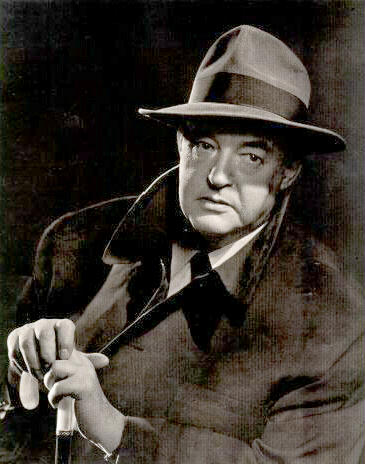
Sydney Greenstreet was only in movies for eight years, yet in the first four of those he made (in addition to The Maltese Falcon) They Died With Their Boots On, Across the Pacific, Casablanca, Background to Danger, Passage to Marseille, Between Two Worlds, The Mask of Dimitrios, The Conspirators - and Hollywood Canteen. This last was a wartime morale-booster featuring cameo performances by just about every star in Hollywood. Including the great double act of Sydney Greenstreet and Peter Lorre. Enjoy them in action here, rescuing Patty Andrews (of the Andrews Sisters) from the clutches of an over-exuberant Marine. Watch and wonder...
Tuesday, 24 December 2013
Happy Christmas

This two-tier Nativity is by Tintoretto and hangs in the upper room of the Scuola di San Rocco in Venice, a Supreme Work of the Human Spirit which I had the pleasure of revisiting in the autumn. Apart from its unusual structure, the Nativity is notable for the presence of a (rather dowdy) peacock among the animals - symbolic, of course - and for the gesture with which Mary unveils the baby Jesus, a gesture that hints both at the uncovering of the consecrated wine during Mass, and at the winding sheet that will wrap His body in due course. The fate of Jesus is also suggested clearly enough by the cross-shaped beams of the broken roof above him. But the painting is essentially 'about' the light - the glorious transforming light - that floods in on the familiar scene, the homely and astonishing miracle.
Monday, 23 December 2013
Talking of Half Man, Half Biscuit...
... as we were - and, indeed, of Ted Hughes - I was delighted to find that Sylia Plath gets a mention in a song by the splendidly named band Half Man Half Biscuit. She is mentioned, what's more, in the unlikely context of Matlock Bath, creating a typically resourceful HMHB rhyme. The song is The Light at the End of the Tunnel (tunnel nicely rhymed with runnel), and the line is 'And when you're in Matlock Bath you don't need Sylvia Plath'. True enough. Matlock Bath, I should explain for those unfamiliar with the Peak District's attractions, occupies a beautiful location in the Derwent valley, but today more closely resembles a downmarket seaside resort than the genteel spa town - and magnet to romantically inclined artists and writers - that it once was. It is extremely popular with motorcyclists, reeks of petrol fumes and chip fat, boasts a theme park called Gulliver's Kingdom and is generally noisy and crowded, while the pubs and cafes seem to be permanently full of very large people eating prodigious quantities of food. It's a good thing Ruskin - who used to rhapsodise about the place - isn't alive to see it now. (Also mentioned in the song is Eyam, the famous Derbyshire 'plague village', which heroically isolated itself during an outbreak of plague.)
Half Man Half Biscuit (strangers to commercial success) have been described as 'England's greatest folk band' and a 'national treasure'. Their song titles are certainly cherishable - Joy Division Oven Gloves, Hedley Verityesque, The Bastard Son of Dean Friedman, I Hate Nerys Hughes, Rod Hull Is Alive - Why?, I Love You Because (You Look Like Jim Reeves), On Passing Lilac Urine... Yes, not exactly the stuff of hit-parade glory.
Should you care to, you can listen to The Light at the End of the Tunnel here. Enjoy...
Half Man Half Biscuit (strangers to commercial success) have been described as 'England's greatest folk band' and a 'national treasure'. Their song titles are certainly cherishable - Joy Division Oven Gloves, Hedley Verityesque, The Bastard Son of Dean Friedman, I Hate Nerys Hughes, Rod Hull Is Alive - Why?, I Love You Because (You Look Like Jim Reeves), On Passing Lilac Urine... Yes, not exactly the stuff of hit-parade glory.
Should you care to, you can listen to The Light at the End of the Tunnel here. Enjoy...
Sunday, 22 December 2013
Solsiticial
It's good to know that the Shortest Day is already behind us; it was yesterday, the 21st of December, and from now on, imperceptibly at first, the days will be getting longer - a cheering thought.
For many centuries, the Shortest Day was thought to be St Lucy's Day, the 13th of December, a feast still rather beautifully celebrated in Baltic countries. John Donne in his famous Nocturnal took St Lucy's Day to be 'the year's midnight' and, as ever, enlisted Nature in the grand project of expressing John Donne's state of mind. Note how, by the end of the extraordinarily beautiful first stanza, he has wrestled the subject round to Himself, and that's where he keeps it for the rest of the poem. It's magnificent stuff, quite brilliantly done - but reading it again reminds me why I seldom return to Donne for pleasure. So much even of his best poetry (especially before he discovered God) is given over to his endless, often florid, self-starring psychodrama. Or am I being unfair? Probably. Here, anyway, is his Nocturnal Upon St Lucy's Day (as an epitaph, it makes an interesting contrast with this one)...
For many centuries, the Shortest Day was thought to be St Lucy's Day, the 13th of December, a feast still rather beautifully celebrated in Baltic countries. John Donne in his famous Nocturnal took St Lucy's Day to be 'the year's midnight' and, as ever, enlisted Nature in the grand project of expressing John Donne's state of mind. Note how, by the end of the extraordinarily beautiful first stanza, he has wrestled the subject round to Himself, and that's where he keeps it for the rest of the poem. It's magnificent stuff, quite brilliantly done - but reading it again reminds me why I seldom return to Donne for pleasure. So much even of his best poetry (especially before he discovered God) is given over to his endless, often florid, self-starring psychodrama. Or am I being unfair? Probably. Here, anyway, is his Nocturnal Upon St Lucy's Day (as an epitaph, it makes an interesting contrast with this one)...
Tis the year's midnight, and it is the day's,
Lucy's, who scarce seven hours herself unmasks;
The sun is spent, and now his flasks
Send forth light squibs, no constant rays;
The world's whole sap is sunk;
The general balm th' hydroptic earth hath drunk,
Whither, as to the bed's feet, life is shrunk,
Dead and interr'd; yet all these seem to laugh,
Compar'd with me, who am their epitaph.
Study me then, you who shall lovers be
At the next world, that is, at the next spring;
For I am every dead thing,
In whom Love wrought new alchemy.
For his art did express
A quintessence even from nothingness,
From dull privations, and lean emptiness;
He ruin'd me, and I am re-begot
Of absence, darkness, death: things which are not.
All others, from all things, draw all that's good,
Life, soul, form, spirit, whence they being have;
I, by Love's limbec, am the grave
Of all that's nothing. Oft a flood
Have we two wept, and so
Drown'd the whole world, us two; oft did we grow
To be two chaoses, when we did show
Care to aught else; and often absences
Withdrew our souls, and made us carcasses.
But I am by her death (which word wrongs her)
Of the first nothing the elixir grown;
Were I a man, that I were one
I needs must know; I should prefer,
If I were any beast,
Some ends, some means; yea plants, yea stones detest,
And love; all, all some properties invest;
If I an ordinary nothing were,
As shadow, a light and body must be here.
But I am none; nor will my sun renew.
You lovers, for whose sake the lesser sun
At this time to the Goat is run
To fetch new lust, and give it you,
Enjoy your summer all;
Since she enjoys her long night's festival,
Let me prepare towards her, and let me call
This hour her vigil, and her eve, since this
Both the year's, and the day's deep midnight is.
Friday, 20 December 2013
Talent and Genius


Subscribe to:
Posts (Atom)
