'With four weeks to go...'
That was the phrase, in a news bulletin, that jolted me out of my stupor. Yes, this Labour leadership election farce still has four weeks to run. What will Jez Corbyn's opponents be prophesying by then? Darkness across the face of the land? Crop failures, murrain, famine and flood? It's clear now that the rise of Corbyn was entirely predictable - after the General Election catastrophe, what else was Labour going to do but jerk itself back into a semblance of life with a shot of pure retro Leftism? A Corbyn victory will be followed in due course by most of the old guard peeling off, reaching out to the still more benighted Lib Dems and forming a grand centre-Left anti-Cameron alliance. They could call it the SDP, or the SDLP... Yes, it's back to the future again!
I hear there's a new 'app' called Warbler that claims to be able to identify birdsong. You just turn your phone to the sound and - hey presto - up comes the name of the bird responsible. They demonstrated it on the radio yesterday with a birdsong recording. Name that bird. Up came Warbler's answer: 68 percent Chaffinch, 51 percent Eurasian Tree Sparrow. It was a House Martin.
Radio 4's Film Programme is appealing for memories of Buster Keaton's tour of British music halls and theatres in 1951 - a tour that seems to be strangely underdocumented, even allowing for the fact that Keaton's star was not shining very bright at that stage in his career. Ten years later, though, he starred in a curious episode of The Twilight Zone - and that, happily, survives. You can watch it here... It's a fun silent-movie hommage - not exactly classic Keaton, but it's still impossible to take your eyes off him, and there are odd flashes of the old genius. And what an athlete he still was - bear in mind that Keaton was 65 years old when he made this, and had devoted a good many of those years to the demon drink.
Friday, 14 August 2015
Wednesday, 12 August 2015
Bird of the Day
This little charmer is the Night Parrot, the latest 'extinct' bird to be found alive and well and quietly going about its business in the wild. Discovered in 1845 and barely seen again until a couple of carcasses turned up in the Queensland Outback in 1990 and 2006, the Night Parrot has been described as the 'holy grail' of birdwatching. Indeed, when a naturalist claimed to have seen one alive in 2013, it was hailed as 'the birdwatching equivalent of finding Elvis flipping burgers in an outback roadhouse'. Well, he may not be Elvis, but he (or she - they don't know, but have called him/her Pedro) has been found now, examined, identified and fitted with an electronic tag - which has since fallen off.
Even the Ivory-Billed Woodpecker - of which I've written before - seems not be extinct, to judge by recent reports of sightings. But the saddest/funniest story of a bird back from 'extinction' is that of Worcester's Buttonquail, an obscure Philippines rarity long thought to have died out altogether. A specimen was filmed unknowingly in 2009 by a documentary crew reporting on life in the mountains of Luzon. Watching the finished film, a local ornithologist was stunned to realise that the bird was a Worcester's Buttonquail. But by then it was too late - the unhappy quail had been taken to market, sold for the equivalent of 10p, and eaten.
Tuesday, 11 August 2015
Piper's Dark Materials
Tate Britain has put a huge archive of John Piper photographs - all black and white, all topographical, many of them related to the artist's work on the Shell Guides - online, and is even asking for help in identifying some of them (and in acquiring images of what the locations look like now). The collection makes for fascinating browsing, and contains many arresting images - like this one from the Surrey archive. Piper's photographs, however functional, are composed with a painter's eye, and the register is, unsurprisingly, dark ('Not very lucky with the weather, were you, Mr Piper?' as the King remarked at a Piper exhibition). Indeed, many of these wonderful photographs would probably be rejected in this era of bright, pin-sharp images. A shame darkness is now so undervalued.
Blyton Born
Born on this day in 1897 was Enid Blyton, who became (and even remains) one of the most popular, biggest-selling children's writers who ever lived. She was born in an apartment above a shop on Lordship Lane, East Dulwich, a stone's throw from the Victorian public library where I, back in the Seventies and Eighties, worked as a reference librarian.
By then, the name of Blyton had become a hissing and a byword; her books were not to be found on the shelves of the children's library, and the London Borough of Southwark (within which Dulwich falls) - a borough otherwise very diligent in celebrating its famous residents or natives - had quite erased Blyton and her birthplace from its collective memory and archives. I was glad to see, then, that there is now a Blue Plaque on that undistinguished building on Lordship Lane. It even bears the name of the London Borough of Southwark, albeit with the ambiguous (disowning?) 'Voted by the People' below. Southwark's Blue Plaque to Sam Wanamaker bears the same legend. The man who got the reconstructed Globe Theatre built was regarded by the council, during my Southwark years, as a right royal pain in the butt.
Monday, 10 August 2015
Butterfly Day
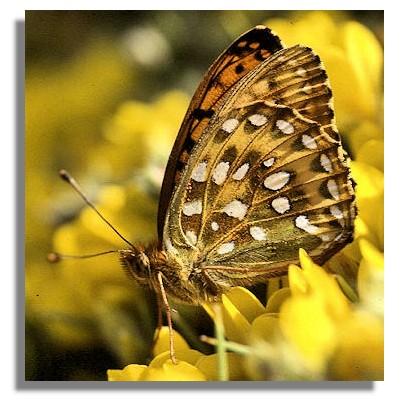
A glorious sunny day yesterday, so naturally I headed for the butterfly-haunted Surrey hills, in hope that the Chalkhill Blues would be flying. I was not disappointed: these pale beauties (as a child I used to think the chalk of the hills had given them their colour) were flying in their hundreds, maybe thousands - almost what you might call, at risk of causing offence, a swarm. No, more a liberal spangling of the grasslands and flowery verges with flying, nectaring, sparring and basking Chalkhills. Several times I saw Chalkhill Blues and Brimstones together feeding on Wild Pea flowers, something I'd never seen before - I wouldn't have thought the Chalkhill's proboscis was long enough to reach the pea flower's nectar... No Adonis Blues this time - perhaps a little early - but a memorable highlight: looking down from the path to check out a low-growing Buddleia at a little distance, I spotted something quite large and showy working its way round a flowerhead. It was hidden for some while, but then it reappeared and, after a short while, flew off - and I realised it was a slightly faded Dark Green Fritillary, the spectacular, strong-flying downland frit, and the first I've seen in several years. The high point of a fine butterfly day.
Sunday, 9 August 2015
Dylan's Boots
Quite late last night, seeking something soothing to fall asleep to, I switched the radio to 4 Extra - and was immediately wide awake. Who was this, fingerpicking away? As soon as the voice came in, there was no question - Bob Dylan, and he was singing Boots Of Spanish Leather, a track from The Times They Are A-Changing' that I hadn't listened to in years - and God it was good. It's easy to forget just how astonishing, how electrifying the young Dylan was, even at his most 'traditional'... The programme I was listening to, it turned out, was called Alan Parker's 59 Minutes Of Truth, Alan Parker being a leftie 'Urban Warrior' alter ego of the comedian Simon Munnery. Urban warrior or not, he knew just what to say after Boots Of Spanish Leather ended: 'Bob Dylan... Boots Of Spanish Leather... Yeah.'
Saturday, 8 August 2015
An Auditory Church and Other Curiosities
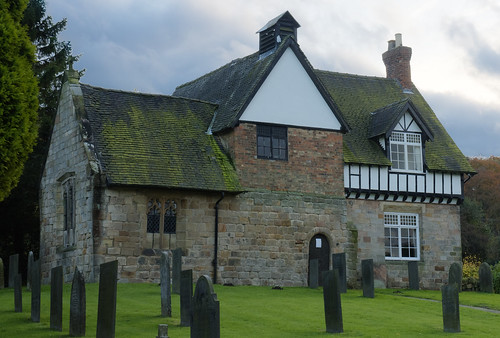
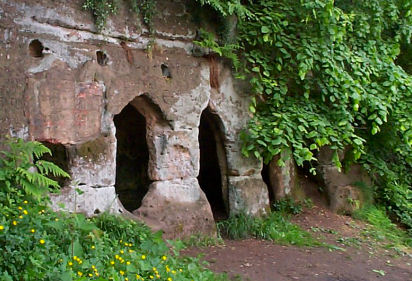
Back from a couple of days in Derbyshire, where, among other things, I visited one of the oddest - and smallest - churches I have ever seen: All Saints, Dale Abbey. We very nearly didn't see it, as this strange building - part church, part stone-and-timber house - was firmly locked when we arrived. What to do? The obvious answer was to climb up into the woods above the church and take a look at the surprisingly well preserved Hermit's Cave, where a 12th-century baker, under instructions from Above, set up home, hewing out three chambers in which to live and worship, conveniently close to the Abbey - long since gone, leaving only scattered remnants, including one mighty arch standing alone in a field.
Returning to the church, we found that by happy chance it had been opened for a group of visitors from Canada with ancestral connections to the parish. So it was that we were able to step into the tiny - 26ft by 25ft - interior, crammed with box pews right up to the altar (such as it is), over which a drunkenly leaning pulpit looms. And above all this, space has somehow been found for a gallery. All Saints is, on its tiny scale, the 'auditory church' triumphant, where preaching is at least as important as liturgy, and all must sit and listen. However, the principle was somewhat undermined during the period when the building that contains the church was the Blue Bell Inn and, according to tradition, bored congregants could slip out through an adjoining door for a spot of refreshment during the sermon. The church is a glorious jumble, with an overwhelmingly 17th-century feel, but, surprisingly, some fragments of medieval wall paintings survive - notably a fine Visitation, dated to the late 13th century.
Then there was Duffield - the church of St Alkmund (an unusual dedication), a handsome, if much restored, 14th-century (and earlier) building, with a spacious interior, fine furnishings and ample evidence of the prosperity of the parish. The highlight here was a quite extraordinary wall monument to himself erected by a local land-owner, Anthony Bradshaw, in 1600, its large inscribed tablets separated by a frieze depicting, in incised images, Bradshaw, his two wives and his 20 children: four sons and, in two tiers of eight, his 16 daughters. Each is identified by initials (though they look all but identical), and below is an ingenious acrostic verse on Anthony Bradshaw's name. He died some 14 years later, having fathered yet three more children, bringing his tally to 23.
In the nearby Duffield Millennium Meadow - grassland, woods and wetland where the Ecclesbourne meets the beautiful Derwent - butterflies were flying among knapweed, meadowsweet, thistles and ragwort in happy abundance: gatekeepers, whites, skippers and faded meadow browns, tortoiseshells, commas, peacocks and red admirals. And yesterday morning, in Wirksworth, came a sudden flypast of half a dozen loud and lively swifts.
As for Wirksworth's incomparable bookshop (The Bookshop), this time it yielded me Mr Fortune's Maggot by Sylvia Townsend Warner - an author who has been recommended to me so often I feel I must now give her a try - and Charlotte Mew and Her Friends by Penelope Fitzgerald, an author whose every word I would happily read, writing about a poet I have never read.
Returning to the church, we found that by happy chance it had been opened for a group of visitors from Canada with ancestral connections to the parish. So it was that we were able to step into the tiny - 26ft by 25ft - interior, crammed with box pews right up to the altar (such as it is), over which a drunkenly leaning pulpit looms. And above all this, space has somehow been found for a gallery. All Saints is, on its tiny scale, the 'auditory church' triumphant, where preaching is at least as important as liturgy, and all must sit and listen. However, the principle was somewhat undermined during the period when the building that contains the church was the Blue Bell Inn and, according to tradition, bored congregants could slip out through an adjoining door for a spot of refreshment during the sermon. The church is a glorious jumble, with an overwhelmingly 17th-century feel, but, surprisingly, some fragments of medieval wall paintings survive - notably a fine Visitation, dated to the late 13th century.
Then there was Duffield - the church of St Alkmund (an unusual dedication), a handsome, if much restored, 14th-century (and earlier) building, with a spacious interior, fine furnishings and ample evidence of the prosperity of the parish. The highlight here was a quite extraordinary wall monument to himself erected by a local land-owner, Anthony Bradshaw, in 1600, its large inscribed tablets separated by a frieze depicting, in incised images, Bradshaw, his two wives and his 20 children: four sons and, in two tiers of eight, his 16 daughters. Each is identified by initials (though they look all but identical), and below is an ingenious acrostic verse on Anthony Bradshaw's name. He died some 14 years later, having fathered yet three more children, bringing his tally to 23.
In the nearby Duffield Millennium Meadow - grassland, woods and wetland where the Ecclesbourne meets the beautiful Derwent - butterflies were flying among knapweed, meadowsweet, thistles and ragwort in happy abundance: gatekeepers, whites, skippers and faded meadow browns, tortoiseshells, commas, peacocks and red admirals. And yesterday morning, in Wirksworth, came a sudden flypast of half a dozen loud and lively swifts.
As for Wirksworth's incomparable bookshop (The Bookshop), this time it yielded me Mr Fortune's Maggot by Sylvia Townsend Warner - an author who has been recommended to me so often I feel I must now give her a try - and Charlotte Mew and Her Friends by Penelope Fitzgerald, an author whose every word I would happily read, writing about a poet I have never read.
Subscribe to:
Posts (Atom)