Monday, 24 August 2015

Max

On a grim day of siling rain and livid skies, it's cheering to note that at least it's Max Beerbohm's birthday - 143 today. Somehow it's always cheering to think of Max - and of how many writers or artists can one say that? He seems to have been - at least in his prime - one of those endlessly likeable people who, in a quiet unshowy manner, make their surroundings and the people around them that bit brighter. This, certainly, is the personality that shines through his writings. The few who disliked him were just the sort of people you'd want to be disliked by: Ezra Pound caricatured him in Hugh Selwyn Mauberley -

'The sky-like limpid eyes,
The circular infant's face,
The stiffness from spats to collar
Never relaxing into grace;

The heavy memories of Horeb, Sinai and the forty years,
Showed only when the daylight fell
Level across the face
Of Brennbaum "The Impeccable".' 


And Malcolm Muggeridge, who cordially loathed Beerbohm, also identified him as Jewish - and homosexual to boot. Max, to his regret, was not Jewish ('That my talent is rather like Jewish talent I admit readily... But, being in fact a Gentile, I am, in a small way, rather remarkable, and wish to remain so'), and his sexuality remains terra incognita, though his long marriage to the American actress Florence Kahn seems to have been happy enough, despite (or because of?) their sharply contrasting temperaments. What's more, he married again shortly before his death at the age of 83.
 As a young boy, Max attended a day school run by a Mr Wilkinson, who, Beerbohm later said, 'gave me my love of Latin and thereby enabled me to write English'. Indeed. If Latin were still taught routinely in schools, the standard of written English would surely be a good deal higher.


Sunday, 23 August 2015

Met and Music

After weeks of notably wayward 'weather forecasts', it was good to hear this morning that the notorious Met Office has lost its BBC contract after 93 long years. This was clearly not the wish of the BBC but, for some crazy reason, the Corporation finds itself obliged these days to get the best value for the licence-payers' money. Let's hope the dumping of the Met Office ushers in an era of better, more accurate forecasting. Alas, it probably won't mean that we've seen the last of those 'personality' forecasters, as they'll be free to negotiate contracts with the new providers. So we can expect the insufferable Tomasz Schafernaker to come bouncing back...

Meanwhile, in the continuing absence of The Dabbler (though there are hopeful signs of life), let's have a little Sunday music.
 Like everybody [?], I devote a good deal of futile thought to my eight Desert Island Discs (you never know when you might find yourself stranded with nothing but a wind-up gramophone, your eight favourite platters, the Bible, Shakespeare and a book of your choice). The music list keeps changing - indeed never settles down to a final eight - but one piece I thought would be a permanent fixture was Vaughan Williams' Tallis Fantasia, music that is both intensely beautiful and intensely English. However, lately I've been drawn more and more to the equally beautiful, equally English Serenade to Music.
 This setting of a famous passage from Act V of The Merchant of Venice ('How sweet the moonlight sleeps upon this bank...'), for orchestra, chorus and 16 soloists - four sopranos, four contraltos, four tenors, two baritones and two basses - is, for obvious reasons, less often performed and recorded than many of RVW's other masterpieces. It was composed as a tribute to Sir Henry Wood, who conducted the first performance, at the Royal Albert Hall on 5 October 1938. Sergei Rachmaninov, who had performed his Second Piano Concerto in the first half of the concert, settled in a box to enjoy the rest of the evening. At the end of the Serenade, he was found in tears, overcome by the beauty of the music. And no wonder.
 Wood also made the first recording of the piece, with the same soloists, and, rather wonderfully, we can still hear it today, just as Vaughan Williams intended it, and (allowing for sound quality) as Rachmaninov would have heard it. Follow this link (and be sure to turn off when the Serenade ends or you might find yourself confronted with the grinning visage of Alan Titchmarsh).

Friday, 21 August 2015

Oliver's Blues

On this day 60 years ago, the 33-year-old Philip Larkin was on his holidays and having a whale of a time (hem hem). Paying a reluctant return visit to his 'unsatisfactory' parental home in the 'unsatisfactory prime' of his life, he was idly playing jazz records in his 'unsatisfactory' room to pass the time. One of them - Joe 'King' Oliver's Riverside Blues - elicited a call of 'That was a pretty one' from his mother in the hall. From that unpromising soil the poem Reference Back sprang suddenly up - a poem that, like so many of Larkin's, climbs steadily in register as it nears its sharp uncomfortable nub, the pain and loss of time's passing.

That was a pretty one, I heard you call
From the unsatisfactory hall
To the unsatisfactory room where I
Played record after record, idly,
Wasting my time at home, that you
Looked so much forward to.
Oliver’s Riverside Blues, it was. And now
I shall, I suppose, always remember how
The flock of notes those antique negroes blew
Out of Chicago air into
A huge remembering pre-electric horn
The year after I was born
Three decades later made this sudden bridge
From your unsatisfactory age
To my unsatisfactory prime.
Truly, though our element is time,
We are not suited to the long perspectives
Open at each instant of our lives.
They link us to our losses: worse,
They show us what we have as it once was,
Blindingly undiminished, just as though
By acting differently, we could have kept it so.
This is the track Larkin was listening to  - the Creole Jazz Band in its prime, 'blindingly undiminished', with Louis Armstrong on second cornet and Johnny Dodds on clarinet. A pretty one indeed...
Fifteen years later, King Oliver died, a broke and broken man, in a rooming house in Savannah.

Wednesday, 19 August 2015

Stop the Dippy Superhighway!

Here's a sorry tale from the Natural History Museum, where plans are afoot to bulldoze a superhighway through its beautiful Wildlife Garden to speed the punters towards Dippy the Diplodocus. You couldn't make it up...
 I enjoyed strolling round that garden - carefully laid out and developed over 20-plus years - on my last visit to the museum. (Indeed, I enjoyed it more than anything else, except the butterflies.) As the scientists point out, it's a unique habitat in central London, and home to some rare species (though the Jersey Tiger certainly isn't rare in London these days). It is also very beautiful, in a very English way. And yet the marketing types who seem to run the museum (and many others) these days want to sacrifice it to a Jurassic theme park and Dippy the feckin' Diplodocus. Let's hope Kensington & Chelsea council puts a stop to this nonsense right away.

Tuesday, 18 August 2015

Finished and Unfinished at the Courtauld

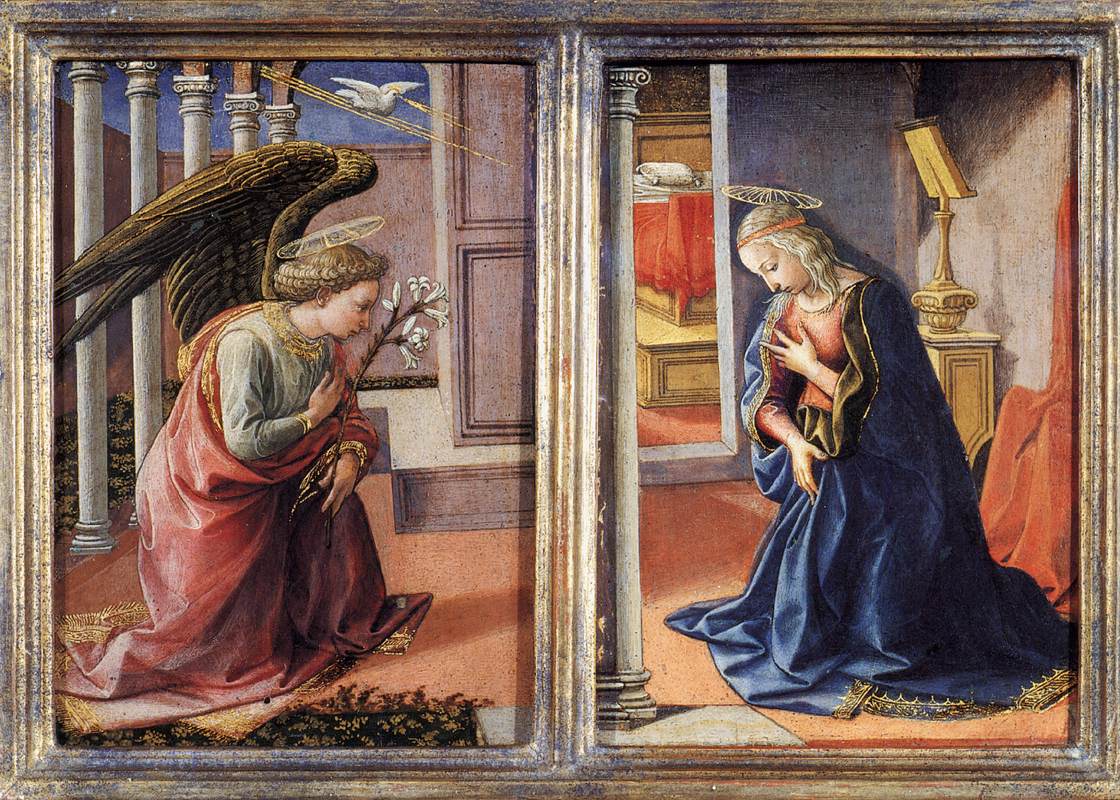
The Courtauld Gallery in Somerset House - its fine rooms radiating from one of London's great staircases - is always a joy to visit, and the more so now that I carry a National Art Pass and get in free. It's a gallery on a manageable scale, famously strong on French Impressionists and Post-Impressionists, but with some very fine paintings from most periods (check out the exquisite Annunciation by Francesco Pesellino in the Medieval to Renaissance room). And the Courtauld always has an interesting temporary exhibition or two on the go. Yesterday I paid a visit to take a look at a couple of the current ones.
 Jonathan Richardson By Himself, in the drawings gallery, is a display of little-known self-portraits by the elder Jonathan Richardson, a big figure in the 18th-century art world as portraitist, theorist, collector and (rather weak) poet. Towards the end of his life, he became fascinated by self-portraiture, drawing himself in a range of poses, formal and informal, sometimes taking inspiration from other self-portraitists, especially Rembrandt. The drawings on show range from delicate images in graphite on vellum to larger chalk drawings (black, white, sometimes red) on paper. The best half dozen of them - large chalk drawings on rough blue paper - are quite extraordinary in their intense and unflinching self-examination, and surely deserve a place among the great English self-portraits. The rest are really little more than interesting background material - but those half dozen are alone worth the entrance money (if you've paid, that is).
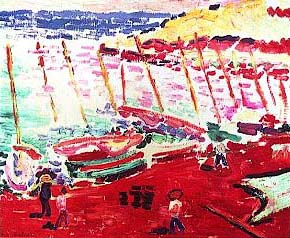
 Unfinished is a more ambitious exhibition, though again it's a one-room affair. As the title suggests, it's a display of 'unfinished' paintings - either clearly unfinished (as in the star attraction, Perino del Vaga's Holy Family) or more debatably so (as with Manet's dashing Au Bal) or finished but regarded by a stunned art world as surely unfinished (as with Matisse's fauvist The Red Beach). All the paintings on show are from the Courtauld's own holdings, so I already knew most of them, but it was a good idea to bring them all together and use them to explore the 'unfinished' theme and the old, always important question of when a picture is finished.
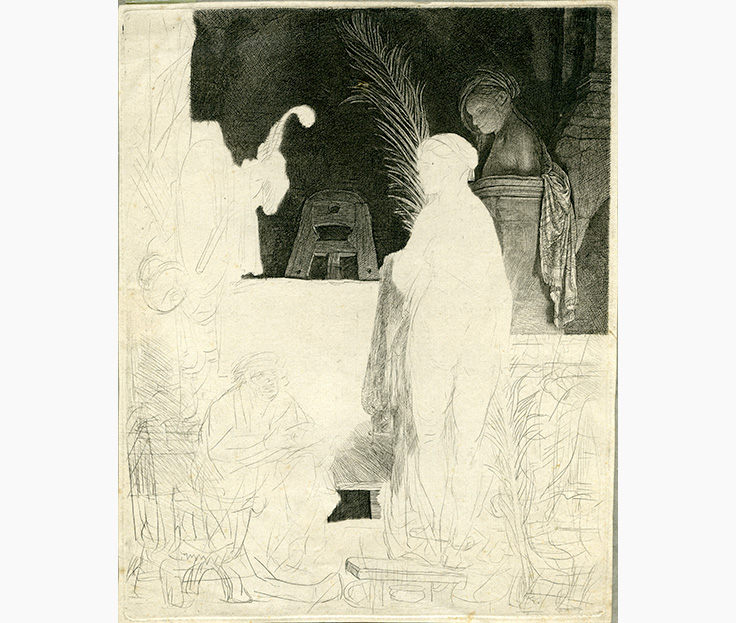
 There is, to our modern eyes at least, a great charm in unfinished works.  Our current taste doesn't demand a high degree of finish and tends to prefer painters who show their workings and leave space for the imagination to fill in what is left suggested rather than fully worked out. But it's more than a matter of taste: the unfinished areas throw into relief the fully worked passages and emphasise their quality, while also casting light on the artist's working methods. Nowhere is this more spectacularly so than in the unfinished Rembrandt etching of The Artist Drawing from the Model, about a third of which is full worked, with the rest freely and lightly sketched in.
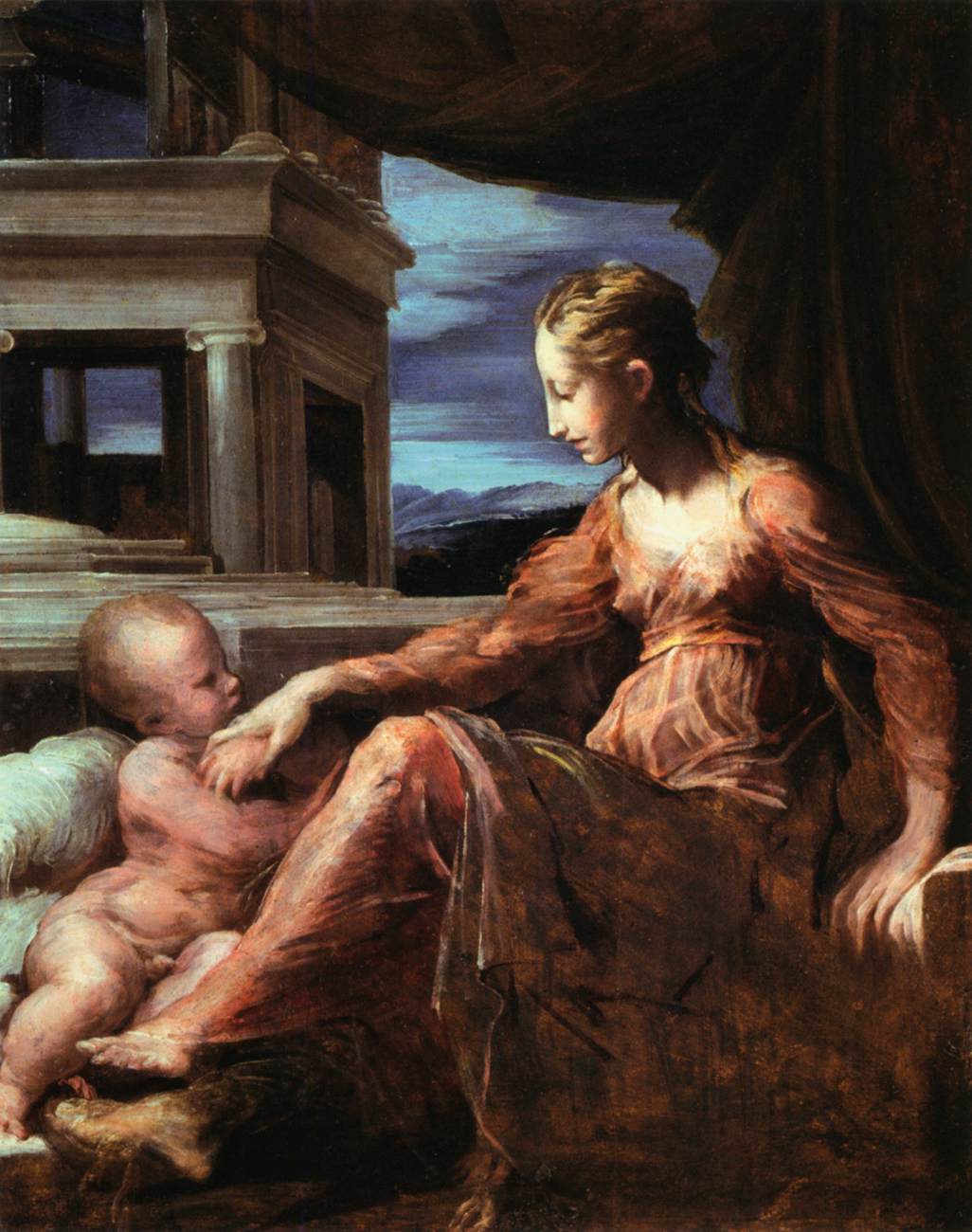
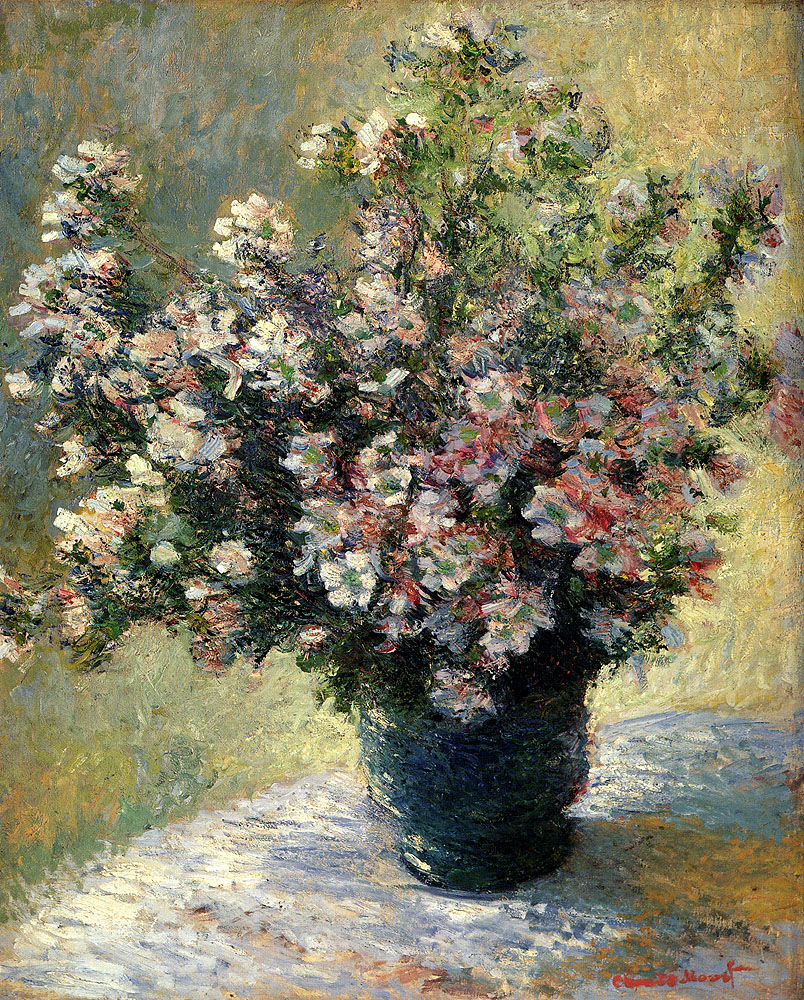
 Unfinished includes a ravishingly beautiful, very nearly finished Parmigianino Virgin and Child and a lovely Reclining Woman in a Landscape by Palma Vecchio, much of the background merely blocked in, the figure beautifully finished. There's also a Monet Vase of Flowers, which looks to me seriously overworked - less a case of not finishing the work as of not knowing when to stop. The Manet mentioned above (Au Bal) seems to have been regarded by the artist as 'finished' - he signed it, after all - and the same surely goes for Degas's extraordinary Woman at a Window, which must be one of the darkest contre-jour paintings ever executed. Degas allowed it to go on sale - and it was promptly snapped up by Walter Sickert, who treasured it as 'Degas's finest work'. It could almost, couldn't it, be a Sickert?

Monday, 17 August 2015

Two Villanelles

It's time for a poem - or two. Let's make them villanelles.
 The villanelle is a rigorous fixed verse form of five tercets and a quatrain following a strict pattern of rhymes and repeat rhymes. The poets of the 1890s used to enjoy writing fancy, essentially empty villanelles - thereby getting the form a generally bad reputation with the next generation. However, the villanelle was a form that never quite went away, and lived to thrive again - perhaps because its technical challenges are both demanding and liberating (from the limitations of direct, informal 'self-expression').
 Perhaps the best-known villanelle of the 20th century is Dylan Thomas's much (far too much) quoted Do Not Go Gentle... But there is also Elizabeth Bishop's One Art, a fine example of the punch a villanelle, in the right hands, can pack - and of how elegantly its challenges can be surmounted and disguised:

The art of losing isn’t hard to master;
so many things seem filled with the intent
to be lost that their loss is no disaster.
Lose something every day. Accept the fluster
of lost door keys, the hour badly spent.
The art of losing isn’t hard to master.

Then practise losing farther, losing faster:
places, and names, and where it was you meant
to travel. None of these will bring disaster.

I lost my mother’s watch. And look! my last, or
next-to-last, of three loved houses went.
The art of losing isn’t hard to master.

I lost two cities, lovely ones. And, vaster, 
some realms I owned, two rivers, a continent.
I miss them, but it wasn’t a disaster.

Even losing you (the joking voice, a gesture
I love) I shan’t have lied. It’s evident
the art of losing’s not too hard to master
though it may look like (Write it!) like disaster.
And here's one, equally accomplished and potent, by the quietly great Donald Justice:
Villanelle at Sundown

Turn your head. Look. The light is turning yellow.
The river seems enriched thereby, not to say deepened.
Why this is, I'll never be able to tell you.

Or are Americans half in love with failure?
One used to say so, reading Fitzgerald, as it happened.
(That Viking Portable, all water spotted and yellow--

remember?) Or does mere distance lend a value
to things? --false, it may be, but the view is hardly cheapened.
Why this is, I'll never be able to tell you.

The smoke, those tiny cars, the whole urban millieu--
One can like anything diminishment has sharpened.
Our painter friend, Lang, might show the whole thing yellow

and not be much off. It's nuance that counts, not color--
As in some late James novel, saved up for the long weekend
and vivid with all the Master simply won't tell you.

How frail our generation has got, how sallow
and pinched with just surviving! We all go off the deep end
finally, gold beaten thinly out to yellow.
And why this is, I'll never be able to tell you. 


Helpfully, the Poetry Foundation website lists the subjects of Elizabeth Bishop's villanelle as 'Living, Disappointment and Failure' (and, as occasion for its use, 'Funeral' - not mine, thanks). No doubt Justice's could be similarly reduced (at the loss of almost everything it is) - and yet, how different it is in feeling from Bishop's work. Justice's acceptance of how things are and how they end is so deeply embedded in all his work, so easy and so natural - even within the tight confines of the villanelle. 'We all go off the deep end/ finally, gold beaten thinly out to yellow...'


sssssss

Sunday, 16 August 2015

Music

In the absence of the Dabbler (technical problems - it should be back up tomorrow) and Mahlerman, here's a piece of Sunday music, something I caught earlier on Radio 3. I had never heard of the Italian baroque composer Giovanni Felice Sances before, but found this rather beautiful...