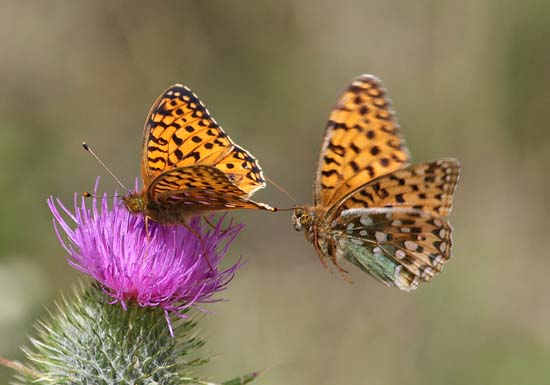
 I know, I know - enough with the butterflies already. But what's a fellow to do? I went for a walk on Box Hill earlier today and I saw not one, not two, but three of these beauties. It's the Dark Green Fritillary - almost as spectacular as the Silver-Washed, and every bit as beautiful, but a little smaller and favouring open land. The ones I saw today were on flowery downland, on the dip slope of the hill, flying strongly (as they do) and hard to follow, so I never quite managed a close-up look. But, talking of flowers, I did have the pleasure of taking a long close look at a Bee Orchid - and to feel the furry body of the 'bee'. Why is the flower formed in this strange simulacrum of a bumble bee? There's an obvious answer: to attract bumble bees to attempt to mate with the decoy bee and thereby pollinate the flower. But in Britain this has never been observed, and the flower is self-pollinating. So the real answer is rather the one that fits so many cases: No one knows. When it comes to orchids - and butterflies - nature seems to be exuberantly playful.
Showing posts with label dark green fritillary. Show all posts
Showing posts with label dark green fritillary. Show all posts
Monday, 22 June 2009
Box Hill Again...
I know, I know - enough with the butterflies already. But what's a fellow to do? I went for a walk on Box Hill earlier today and I saw not one, not two, but three of these beauties. It's the Dark Green Fritillary - almost as spectacular as the Silver-Washed, and every bit as beautiful, but a little smaller and favouring open land. The ones I saw today were on flowery downland, on the dip slope of the hill, flying strongly (as they do) and hard to follow, so I never quite managed a close-up look. But, talking of flowers, I did have the pleasure of taking a long close look at a Bee Orchid - and to feel the furry body of the 'bee'. Why is the flower formed in this strange simulacrum of a bumble bee? There's an obvious answer: to attract bumble bees to attempt to mate with the decoy bee and thereby pollinate the flower. But in Britain this has never been observed, and the flower is self-pollinating. So the real answer is rather the one that fits so many cases: No one knows. When it comes to orchids - and butterflies - nature seems to be exuberantly playful.


Subscribe to:
Posts (Atom)
