Monday, 30 April 2012
Alice
Today is the birthday of Gertrude Stein's companion Alice B. Toklas (born 1877), who has come down to posterity as the creator of an interesting form of fudge (barely eatable as I recall, but worth the effort). On the Radio 4 series Great Lives recently, someone was trying to make the case for her as a major figure who has been unjustly neglected, largely as a result of Gertrude Stein's relentless self-promotion and domineering personality. Well maybe - and Alice was no doubt a nicer person than Gertrude - but probably, like Edith Sitwell, the pair of them belong more to the history of showbusiness than of art. Great collectors though... Unfortunately, ever since Jonathan Law drew it to my attention, I've been unable to disentangle the real Alice B. Toklas from the portrayal of her in the deranged Swedish film Adventures Of Picasso by that notorious deprecator of New Zealand cathedrals Wilfrid Brambell. Perhaps there's a certain truth in Brambell's performance... Here's a taste of it.


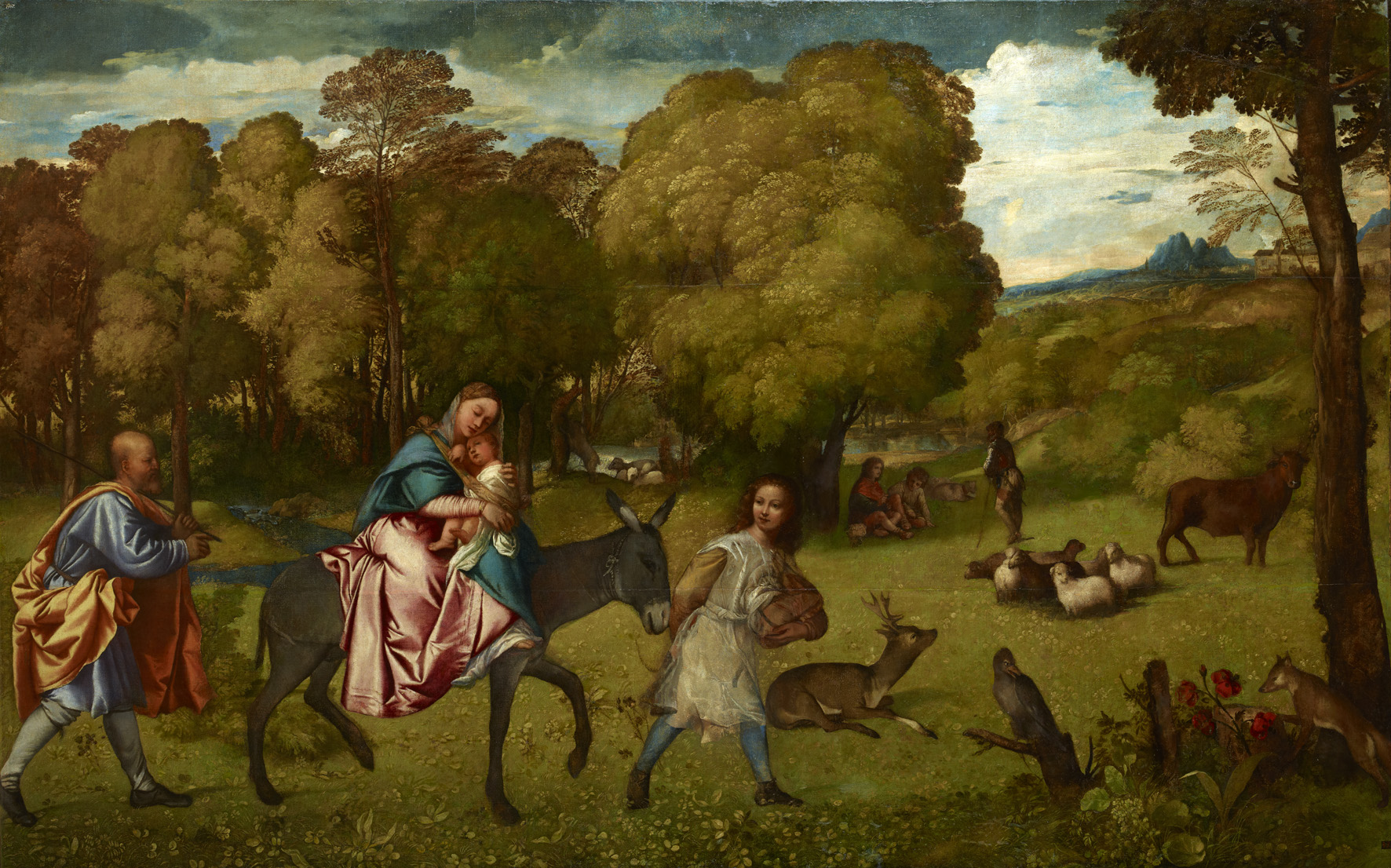
Titians' First Masterpiece?
Saturday, 28 April 2012
Chris Ethridge

Friday, 27 April 2012
The Voyage of the Narwhal
Recently a friend strongly recommended that I read Andrea Barrett, an American with a scientific background who writes novels and short stories, mostly historical. I did what I usually do: made a note of the name, forgot all about it, found the note again, remembered, and bought the cheapest title available on Amazon Marketplace. This was a pretty fat, handsomely produced volume, a novel called The Voyage of the Narwhal, and I have just finished reading it. For me, it was a novel of two halves - strictly speaking of three parts, two of which I found gripping and impressive and the third and last sadly uninvolving.
The Voyage... tells the story of an Arctic expedition in the 1850s, one occasioned by the mania to find out what became of Sir John Franklin's doomed expedition. The main characters - especially the recklessly ambitious expedition leader Zeke and the thoughtful naturalist Erasmus, whose life seems stalled and failed - are well drawn, and Barrett's immersion in her period and subject are so complete and convincing that at times she almost rivals Penelope Fitzgerald, though she is nothing like so concise (who is?). As the expedition gets under way - and the sense of impending disaster gradually grows - Barrett evokes the sights and sounds of the icy landscape brilliantly: the eerie strangeness of it, the terrifying power of the weather, the unstoppable force of the ice... Themes are apparent -
the dawning of Darwinian ideas, the arrogance of 'discovery', the contradictory stories that can be made out of the same events, the plight of the women who wait, cannibalism (real and figurative), exploitation - but they do not obtrude; they are part of the whole. For the entirety of the expedition - the first two parts of the book - I was hooked... But then came the long aftermath, and everything changed. It felt now as if the author's imaginative energy was seeping away, like air from a punctured balloon. Her characters began to lose their independent life, working now to illustrate her themes and fulfil their fictional destiny. I lost interest even in the lovable Erasmus, and by the time the novel laboured to a close, I was reading more from self-imposed duty than for pleasure. I felt as if I'd said goodbye to the characters - and to the real heart of the novel - back there on the Arctic ice.
I'd be interested to hear from anyone else who has read The Voyage... or any other of Andrea Barrett's fictions. I have the feeling that she is potentially a very good, and very interesting writer. Perhaps she is at her best over a shorter distance?
Thursday, 26 April 2012
And Met men say there's more to come...
'Whan that Aprille with his shoures soote
The droght of Marche hath perced to the roote...'
Well, shoures soote are one thing, but what we've been having this April is another matter altogether - day after day of rain, with torrential, wind-lashed downpours dumping a month's-worth of the stuff in hours. It's been relentless Haggard weather, and there's no end in sight. What's worse, we in the Thames Water area know that even when it does eventually end, the drocht of Marche has been thoroughly perced and we can put our ark-building projects on hold, we will still be 'in drought' and banned from using our hosepipes, thanks to Thames's insistence on losing a full 25 per cent of its water in leaks (while exhorting us to save water by not running the tap while brushing our teeth, etc.).
The spring butterflies will be suffering terribly - I can't imagine there have been many Pearl-Bordered Fritillaires flying down in the storm-lashed West Country these past few weeks. And it all started so well, with the wonderfully warm sunny March weather. By All Fools Day, I had already seen Red Admirals, Brimstones, Small Whites, Peacocks, Holly Blues, Orange Tips and Speckled Woods. Since then, nothing new, apart from the Green Hairstreak that flew into my dream last night and perched in full view on a pathside shrub. This lifted the sodden spirits no end - as did the sight, from the train yesterday evening, of a glorious double rainbow over Clapham. But I wasn't quite as excited as this fellow...
Tuesday, 24 April 2012
Six Wives and Oliver Wendell Holmes
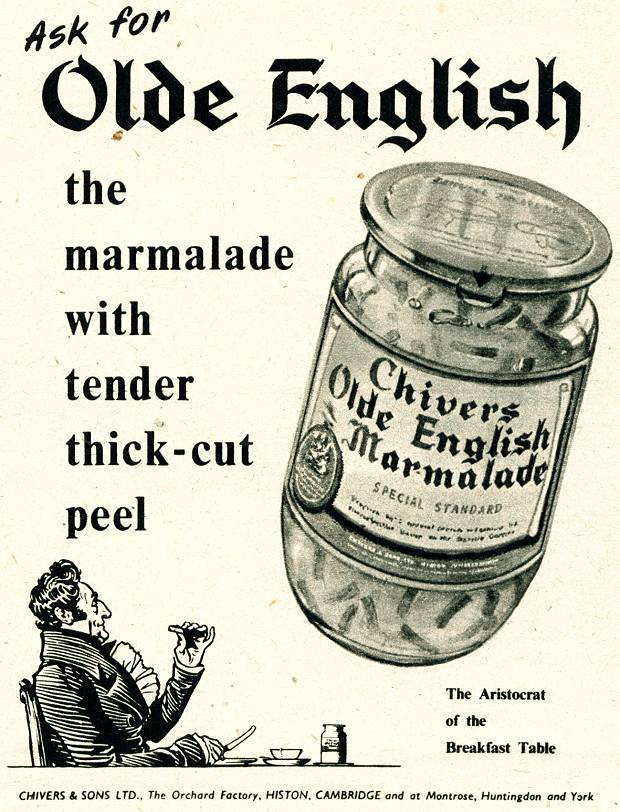
Restaurant decor - the creation of a class of persons who style themselves as interior designers - is often bad, often merely bland, and often has an element of the random or downright bizarre. The other day I was eating in an Italian - or rather Italianate - restaurant, one of a small chain. Here the decor was generally bland to the point of being unnoticeable - a kind of creamy beige prevailed - but the graphics introduced that mystifying random note. Much of one wall - where you might reasonably expect something vaguely Italian or Mediterranean - was given over to stylised representations of all six wives of Henry VIII (no, this was nowhere near Hampton Court) with their names writ large in 'Gothic' script. Stranger still, another wall was embellished with a quotation from Oliver Wendell Holmes. The quotation itself was fair enough - 'The true essentials of a feast are only fun and feed' - but Oliver Wendell Holmes, for heaven's sake! There's a name that must mean little or nothing to today's readers - a giant of 19th-century American letters who is today probably even more forgotten than his fellow giants Longfellow, J.R. Lowell and Whittier. His most popular works were the Breakfast Table series of conversational essays, The Autocrat of the Breakfast Table, The Poet of the Breakfast Table and The Professor at the Breakfast Table - and these were popular indeed, selling in such numbers even on this side of the Atlantic that they are still a frequent sight on the shelves of charity shops (I suspect second-hand bookshops have given up even trying to sell them). I must admit I have never knowingly read anything of Holmes's - is he worth looking into? Perhaps one of my American readers will know... Certainly his work (or at least one of his titles) was so familiar to English audiences that when Chivers launched its thick-cut Olde English marmalade in 1907, it commended it as 'the aristocrat of the breakfast table'. The label on the jar still bore that legend when I was a boy - which caused me some confusion when I first became aware that there was a book of more or less the same name. But I managed to live with it - just one more bewildering feature of a bewildering world...

Sunday, 22 April 2012
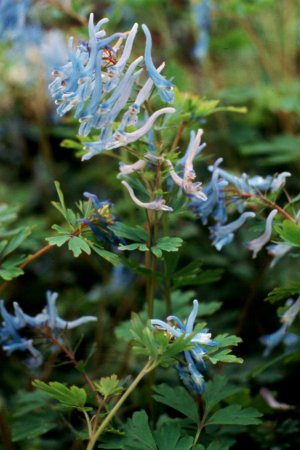
Corydalis: Crested Lark to Clouded Apollo

Subscribe to:
Posts (Atom)
