New Year's Eve, and I began the day in style by falling out of bed, which I don't recommend (and no, I wasn't drunk) - but now it's time to look back on 2016. Not on world events - dramatic though they've been (I've touched on all that here) - nor on the relentless succession of notable deaths, but on some of the highlights of my year, as reflected on this blog.
In January - and how long ago it seems - I was in the fine city of Wellington, enjoying the family, encountering new butterflies and birds, and reading Flannery O'Connor's The Violent Bear It Away, Michel Houellebecq's Submission and F.M. Mayor's The Rector's Daughter - also visiting Katherine Mansfield's childhood home.
Back in Blighty, I enjoyed an exhibition of work by Roland Collins - the start of a good year's gallery haunting that included Pre-Raphaelite drawings at Leighton House, George Shaw's My Back to Nature at the National Gallery, Opus Anglicanum at the V&A, Abstract Expressionism at the Royal Academy, Edward Ardizzone at the House of Illustration, and Rodin and Dance at the Courtauld - not to mention an art-rich week in Venice in September.
By contrast, my only visit to the theatre was an experience to forget, though my only visit to the cinema, on the other hand, was an absolute joy - Hail, Caesar!
It was another good year for church crawling and church monuments (a growing obsession), my travels taking me from Hertfordshire to Derbyshire (and again), Cheshire, Nottinghamshire and a wondrous collection of newly restored monuments in Northamptonshire.
A spring walking holiday in the Mani - a feast of Byzantine art, sunshine, butterflies and wild flowers - included a memorable visit to Patrick Leigh Fermor's house.
The English weather was iffy - much of the spring cool and wet, and early summer bright but cool. However, high summer and early autumn were glorious, and I had a terrific butterfly year - the Year of the Hairstreak - about which I've written already.
My reading (of books new to me) included Javier Marias (twice), Sylvia Townsend Warner's The Corner that Held Them, J.L. Carr's The Battle of Pollock's Crossing, and Adam Nicolson's The Mighty Dead: Why Homer Matters, and I discovered the novelist Elizabeth Jenkins.
What else? I followed The Dabbler onto Facebook, made a return visit to a long-ago boyhood haunt, ditched my electric lawn mower and went manual, and invented a new cocktail - the Nigroni.
As I said, I'm not going to rehearse the year's death toll, but cannot ignore the sad loss of England's greatest poet, Geoffrey Hill. To end on a happier note, though, America's greatest, Richard Wilbur, is still with us. I celebrated his 95th birthday with this.
A Happy New Year to all my readers - and try not to fall out of bed...
Saturday, 31 December 2016


Thursday, 29 December 2016
Casals
Casals first encountered the Bach cello suites when, as a boy of 13, he came across a tattered copy of the sheet music for the six suites in a second-hand shop. He studied and practised them daily for the next 13 years before performing them in public for the first time.
The video clip above shows him playing the first suite at the Abbaye Saint Michel de Cuxa in 1954. Balm for the soul...
Wednesday, 28 December 2016
A Puzzle
A few months ago, I put up a link to this piece that I wrote about Dutch flower paintings at the National Gallery. Now a letter - email rather - has come in, asking a question to which I have no answer. So naturally I'm throwing it open to my erudite readers...
My correspondent points out that, despite the Dutch passion for flowers and flower paintings in the 17th century, the interiors depicted so beautifully in paintings of the period seem never to feature any flowers at all, not so much as a few tulips in a vase.
Obviously the kind of arrangements depicted in those virtuoso flower paintings were out of the question - but no flowers at all in the house? Or perhaps there were flowers, but for some reason they were omitted by the painters of interiors?
I can't think of a single Golden Age interior painting with flowers in it, nor can I explain their absence. Has anyone got any ideas?
My correspondent points out that, despite the Dutch passion for flowers and flower paintings in the 17th century, the interiors depicted so beautifully in paintings of the period seem never to feature any flowers at all, not so much as a few tulips in a vase.
Obviously the kind of arrangements depicted in those virtuoso flower paintings were out of the question - but no flowers at all in the house? Or perhaps there were flowers, but for some reason they were omitted by the painters of interiors?
I can't think of a single Golden Age interior painting with flowers in it, nor can I explain their absence. Has anyone got any ideas?
Tuesday, 27 December 2016
A little late
A little late, I know, but it's still Christmastide, and I heard this beautiful piece of festive music by Schoenberg the other day and it's stayed with me. Enjoy...
Monday, 26 December 2016
The Death Tape and Post-Fiction
The Death Tape was playing in the pub earlier - well, not tape these days, of course, but it was, as we gradually realised, a compilation of music by all the stars who have died this year in the Great Cull. So far this year, that is - not wise to talk too soon, when they're still dropping like flies: Rick Parfitt and George Michael in the past couple of days, who else before the year's out? George Michael was in the mix so this was a bang up to date compilation, and there were Bowie and Cohen and Prince and the Eagles (for Glenn Frey) and the less obvious likes of Bobby Vee, Merle Haggard, Prince Buster... What a year it's been for deaths - see Mr Appleyard's fine summing-up here.
And it was an equally big year for Events, a year in which things happened - notably Brexit and Trump - that actually changed the landscape. Predictably enough, neither of these biggies was predicted by any of the pundits, aka 'experts' - the same experts who also unanimously failed to see the 2008 crash coming, and who before that insisted that Britain must join the Euro and, before even that, the ERM. The pundits, of course, carry on as if nothing has happened, seem to have learned nothing, and continue to predict what's in store for us. And the popular rejection of the consensus they represented is characterised as the birth of 'post-truth' (official Word of the Year) politics, a political climate in which facts count for nothing, and instincts and feelings dictate choice.
There's something in this analysis, but not in the sense that's implied. The representatives of 'post-truth', it seems to me, are those who cling to the comfort blanket of the old exploded certainties, who cannot acknowledge that things have changed, that Brexit and Trump happened, and happened not because people had gone mad but because enough of them had stopped believing in a consensus that no longer reflected the realities of their experience. Who's deluded here? Who's in denial? It seems to me we're now living in 'post-fiction' times, and should be glad of it.
Meanwhile I look forward to the Correspondents' Look Ahead on Radio 4 on Friday, in which BBC correspondents tell us once more what's not going to happen in the coming year.
And it was an equally big year for Events, a year in which things happened - notably Brexit and Trump - that actually changed the landscape. Predictably enough, neither of these biggies was predicted by any of the pundits, aka 'experts' - the same experts who also unanimously failed to see the 2008 crash coming, and who before that insisted that Britain must join the Euro and, before even that, the ERM. The pundits, of course, carry on as if nothing has happened, seem to have learned nothing, and continue to predict what's in store for us. And the popular rejection of the consensus they represented is characterised as the birth of 'post-truth' (official Word of the Year) politics, a political climate in which facts count for nothing, and instincts and feelings dictate choice.
There's something in this analysis, but not in the sense that's implied. The representatives of 'post-truth', it seems to me, are those who cling to the comfort blanket of the old exploded certainties, who cannot acknowledge that things have changed, that Brexit and Trump happened, and happened not because people had gone mad but because enough of them had stopped believing in a consensus that no longer reflected the realities of their experience. Who's deluded here? Who's in denial? It seems to me we're now living in 'post-fiction' times, and should be glad of it.
Meanwhile I look forward to the Correspondents' Look Ahead on Radio 4 on Friday, in which BBC correspondents tell us once more what's not going to happen in the coming year.
Saturday, 24 December 2016
Happy Christmas

(The Holy Family with a Shepherd, painted by Titian around 1510, now one of the glories of the National Gallery.)
Friday, 23 December 2016
Harvey: Ducks and more
Browsing sleepily in an anthology last night, I came across this:
Ducks
(to E.M., who drew them in Holzminden Prison)
From troubles of the world
I turn to ducks,
Beautiful comical things
Sleeping or curled
Their heads beneath white wings
By water cool,
Or finding curious things
To eat in various mucks
Beneath the pool,
Tails uppermost, or waddling
Sailor-like on the shores
Of ponds, or paddling
– Left! Right! – with fanlike feet
Which are for steady oars
When they (white galleys) float
Each bird a boat
Rippling at will the sweet
Wide waterway…
It's the first (and best) part of a poem by Frederick William Harvey, and I half remembered it, probably from other anthologies. It's a lovely piece of work - a vivid sketch deftly drawn (check out the rhyme scheme) - but who was F.W. Harvey?
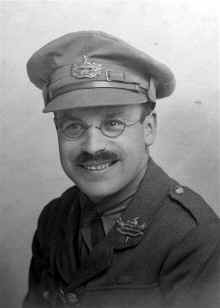 He was, I discovered, a close friend of Ivor Gurney, whom he met at the King's School, Gloucester, and, like Gurney, he was a 'war poet' of the Great War, but in a far more straightforwardly nostalgic and good-humoured vein (like an upbeat Housman, if such a thing is imaginable - his first collection was called A Gloucestershire Lad at Home and Abroad). Ducks was written while he was a prisoner of war, inspired by a chalk drawing a fellow prisoner had made above his bed. Before being taken prisoner, Harvey had won a DCM for conspicuous gallantry.
After the war, he returned home to work as a lawyer, but his willingness to waive his fees, while making him popular as 'the poor man's solicitor', meant his business never thrived. He continued writing, made radio broadcasts, and was a tireless champion of the Forest of Dean, its people and traditions. As well as 'the Laureate of Gloucestershire', he was also known as 'the Forest Poet'. 'Will' Harvey was hugely popular in his home county, and was clearly an all-round good egg. Look at the picture of him - genial, open, relaxed, full of life, even in uniform. There could hardly be a more striking contrast to his troubled friend Ivor Gurney.
His poems lend themselves particularly well to music and have been set by a range of composers, from Gurney and Herbert Howells to Johnny Coppin. One of Ivor Gurney's best-known songs, In Flanders, is a setting of a Harvey poem - I hadn't realised. Here are the words -
- and here is the song.
Ducks
(to E.M., who drew them in Holzminden Prison)
From troubles of the world
I turn to ducks,
Beautiful comical things
Sleeping or curled
Their heads beneath white wings
By water cool,
Or finding curious things
To eat in various mucks
Beneath the pool,
Tails uppermost, or waddling
Sailor-like on the shores
Of ponds, or paddling
– Left! Right! – with fanlike feet
Which are for steady oars
When they (white galleys) float
Each bird a boat
Rippling at will the sweet
Wide waterway…
It's the first (and best) part of a poem by Frederick William Harvey, and I half remembered it, probably from other anthologies. It's a lovely piece of work - a vivid sketch deftly drawn (check out the rhyme scheme) - but who was F.W. Harvey?
After the war, he returned home to work as a lawyer, but his willingness to waive his fees, while making him popular as 'the poor man's solicitor', meant his business never thrived. He continued writing, made radio broadcasts, and was a tireless champion of the Forest of Dean, its people and traditions. As well as 'the Laureate of Gloucestershire', he was also known as 'the Forest Poet'. 'Will' Harvey was hugely popular in his home county, and was clearly an all-round good egg. Look at the picture of him - genial, open, relaxed, full of life, even in uniform. There could hardly be a more striking contrast to his troubled friend Ivor Gurney.
His poems lend themselves particularly well to music and have been set by a range of composers, from Gurney and Herbert Howells to Johnny Coppin. One of Ivor Gurney's best-known songs, In Flanders, is a setting of a Harvey poem - I hadn't realised. Here are the words -
I'm homesick for my hills again -
My hills again!
To see above the Severn plain,
Unscabbarded against the sky,
The blue high blade of Cotswold lie;
The giant clouds go royally
By jagged Malvern with a train
Of shadows. Where the land is low
Like a huge imprisoning O
I hear a heart that's sound and high,
I hear the heart within me cry:
'I'm homesick for my hills again -
My hills again!
Cotswold or Malvern, sun or rain!
My hills again!'
My hills again!
To see above the Severn plain,
Unscabbarded against the sky,
The blue high blade of Cotswold lie;
The giant clouds go royally
By jagged Malvern with a train
Of shadows. Where the land is low
Like a huge imprisoning O
I hear a heart that's sound and high,
I hear the heart within me cry:
'I'm homesick for my hills again -
My hills again!
Cotswold or Malvern, sun or rain!
My hills again!'
Subscribe to:
Posts (Atom)
