'Unless a man is an extraordinary coxcomb, a person of private means,
or both, he seldom has the time and opportunity of committing, or the
wish to commit, bad or indifferent verse for a long series of years; but
it is otherwise with woman.'
Lawks! This withering verdict on female versifying was published in the Cambridge Guide to English Literature, a propos the writings of the Victorian poet and children's author Jean Ingelow. She was very popular in her day, and her name just about lives on as the author of the well-loved anthology piece, The High Tide on the Coast of Lincolnshire (often requested on Radio 4's Poetry Please) - no doubt it was the recent spell of atrocious coastal weather that put that into my mind. It's a powerful piece, if overlong, overblown and overloaded with archaisms - read it here, if you like.
A poem of Jean Ingelow's that I hadn't come across before was her other great success - Divided. And this the Cambridge Guide praises, if grudgingly: 'If we had nothing of Jean Ingelow’s but the most remarkable poem
entitled Divided, it would be permissible to suppose the loss [of her],
in fact or in might-have-been, of a poetess of almost the highest
rank... Jean Ingelow wrote some other good things, but nothing at all
equalling this; while she also wrote too much and too long...' Divided - while not exactly a model of brevity and understatement - is a vivid piece of work that packs quite an emotional punch. And it contains a lovely glimpse of butterflies:
''Twixt the two brown butterflies waver,
Lightly settle, and sleepily swing.'
Sleepily swing... Meadow Browns, I'm guessing. You can read Divided here - and it's well worth a look.
Wednesday, 8 January 2014


Tuesday, 7 January 2014
Retroprogressive News
In what is fast becoming an annual fixture, I'm happy to report that vinyl sales are up again - by a whopping 101 percent in the UK (where CD sales fell by 13 percent). What's especially heartening about this trend is that it's being driven not by grizzled nostalgists but by groovy (gedit?) youngsters discovering for themselves the manifold attractions of the 12-inch vinyl LP.
Arnold Ridley
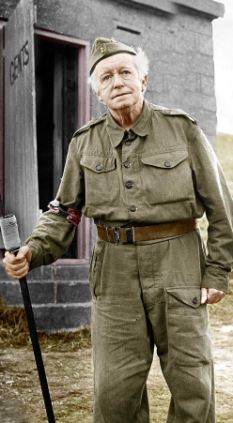
A bit of well deserved good luck came his way in 1923 when a night stranded at a remote railway station gave him the idea for his big hit play - The Ghost Train. This ran and ran, and was filmed twice, the second time with 'big-hearted' Arthur Askey. Ridley became for a while a famous and prolific playwright, until his kind of work fell out of fashion. He was getting by as a jobbing actor - one of his roles was as the baker Doughy Hood in The Archers (I remember him well) - when Dad's Army came along and made a star of him, in his 70s, and carried him on into his 80s, still working. 'Well done, Godfrey.'
Monday, 6 January 2014
Kindle: How Not to Do It
I've finally succumbed to Kindle - well, not me personally, but I bought one for Mrs N for Christmas, thinking it would serve her very much better than me. I also thought it would be a doddle to set it up and get it working - I mean, the packaging has such a pleasingly low-tech, book-like feel to it, and the Kindle itself looks like the simplest conceivable piece of kit, the kind of thing the most technophobic bookworm could handle. Surely, I thought, even I will be able to get to grips with this one...
You're ahead of me here, no doubt, and asking yourself Will he never learn? The first challenge was to connect to the home WiFi network, which of course required a password, which of course I didn't know and which of course should have been on the router, but nothing I found thereon functioned as a password. At this point, I gave up for the first time. Yesterday, I renewed my assault on the impregnable Kindle. I had soon made a major breakthrough, having noticed that there was a way to connect to WiFi without a password (as, no doubt, any fule kno). It worked. With a hearty cheer, I announced that we were connected and ready to go. Next step, sign in to Mrs N's Amazon account. The work of a moment. Done. Here we go at last. Except that we don't - or rather we do go, but straight back to square one, as if none of the above had happened. At this point, with something rather stronger than a muttered oath, I gave up for the second and last time.
The Kindle awaits the next visit from my son, who will get it up and running in a matter of minutes. It's a generation thing.
Sunday, 5 January 2014
Beautiful Bookshops
My daughter sent me a link to this gallery of pictures of beautiful bookshops around the world. Enjoy...
Friday, 3 January 2014
What Did She See in Him?

So opined Hubert Bland, born on this day in 1855. A founder member of the Fabian Society, Bland would be an even smaller footnote than he is, had he not also been the husband of the great children's writer E. Nesbit. Clearly no feminist, he was also a rum kind of socialist, holding strongly pro-imperialist views and characterising democracy as 'anti-national and vulgar'. A large, pugnacious and fearsome man, with a voice 'like the scream of an eagle' (according to Shaw), Bland completed a full house of contradictions by joining the Roman Catholic Church in his middle age, though he was barely observant. Nobody seems to have had a good word to say for him, and yet many otherwise intelligent people fell under his spell - including, alas, Edith Nesbit.
Edith was just 18 when she met Bland, and they married in haste, with Edith seven months pregnant. At first Bland lived partly with Edith and partly at home with his mother and her companion - whom Edith later discovered to have had a son by him. And there turned out to be another woman who believed herself to be Bland's fiancee. But worse was to come later, when Edith discovered that her good friend Alice Hoatson was also pregnant by Hubert, who bullied Edith into taking in Alice and the child. Thirteen years later, Alice bore another child by Hubert, who was also taken in to the household and adopted.
Bland also found time to father three children by Edith, of whom her favourite son Fabian tragically died at the age of 15 in a botched tonsilectomy. By now Nesbit was launched on the successful career as a children's writer that would support Hubert and the family and enable them to entertain on a grand scale - though Edith was often upstairs writing, sustained by gin and cigarettes. Around 1911, Hubert began to go blind, and Edith, of course, cared for him until his death in 1914. Happily, she went on to remarry - this time to the genial and much less problematic Thomas 'the Captain' Tucker, at the time an engineer on the Woolwich ferry. They ended up living companionably and very happily in New Romney, where Edith died. She is buried in the churchyard of St Mary in the Marsh, her grave marker made by her grieving second husband.
Thursday, 2 January 2014
Today
Unfortunately I seem to be unable to start my day - my working day anyway - without the Today programme playing on the radio. This being the festive season, we are currently being subjected to a run of dreary and mildly irritating 'guest editors' - and today's was the singer-songwriter P.J. Harvey, described throughout as an 'artist'. Happily I missed most of the programme - including the ineffable Julian Assange's contribution - but I did catch a sustained rant by the notorious John Pilger, a man who has, we were reminded, won major awards for his journalism. Since everything he says and does is motivated by a blatant, overt and unshakable preconviction that the West (notably the US and its 'poodle' the UK) is by definition evil and murderous, one wonders how his work can be taken seriously, but it is, it is - especially by the likes of P.J. Harvey and the BBC (though Pilger's work only ever seems to surface on ITV). Pilger began by blaming 'the media' (singular) for the 'fact' that the British public didn't 'know' that a million civilian deaths had been caused by the US-UK intervention in Iraq... And so it went on. I'm sure you get the gist.
I wonder, would a journalist motivated by the opposite preconviction - that We are by definition the good guys in all circumstances and the Others the bad guys - get air time, even as a guest of a guest editor? It seems unlikely. But even by the standards of the BBC, letting Polly Harvey loose on the Today agenda looks like a step too far. She even inflicted some dreary songs on us - and a poem by Rowan Williams, who is probably already regretting his participation. Let's hope so. And let's hope the BBC is lining up Rush Limbaugh as a guest editor next year.
I wonder, would a journalist motivated by the opposite preconviction - that We are by definition the good guys in all circumstances and the Others the bad guys - get air time, even as a guest of a guest editor? It seems unlikely. But even by the standards of the BBC, letting Polly Harvey loose on the Today agenda looks like a step too far. She even inflicted some dreary songs on us - and a poem by Rowan Williams, who is probably already regretting his participation. Let's hope so. And let's hope the BBC is lining up Rush Limbaugh as a guest editor next year.
Subscribe to:
Posts (Atom)
