Tuesday, 11 August 2015

Blyton Born

Born on this day in 1897 was Enid Blyton, who became (and even remains) one of the most popular, biggest-selling children's writers who ever lived. She was born in an apartment above a shop on Lordship Lane, East Dulwich, a stone's throw from the Victorian public library where I, back in the Seventies and Eighties, worked as a reference librarian.
 By then, the name of Blyton had become a hissing and a byword; her books were not to be found on the shelves of the children's library, and the London Borough of Southwark (within which Dulwich falls) - a borough otherwise very diligent in celebrating its famous residents or natives - had quite erased Blyton and her birthplace from its collective memory and archives. I was glad to see, then, that there is now a Blue Plaque on that undistinguished building on Lordship Lane. It even bears the name of the London Borough of Southwark, albeit with the ambiguous (disowning?) 'Voted by the People' below. Southwark's Blue Plaque to Sam Wanamaker bears the same legend. The man who got the reconstructed Globe Theatre built was regarded by the council, during my Southwark years, as a right royal pain in the butt.

Monday, 10 August 2015

Butterfly Day

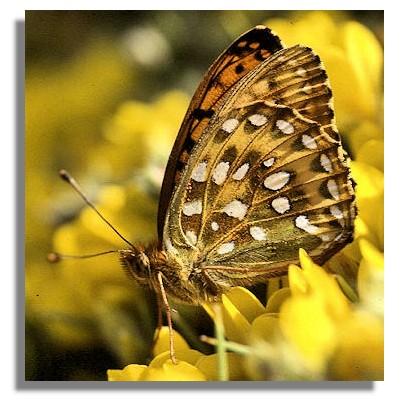
A glorious sunny day yesterday, so naturally I headed for the butterfly-haunted Surrey hills, in hope that the Chalkhill Blues would be flying. I was not disappointed: these pale beauties (as a child I used to think the chalk of the hills had given them their colour) were flying in their hundreds, maybe thousands - almost what you might call, at risk of causing offence, a swarm. No, more a liberal spangling of the grasslands and flowery verges with flying, nectaring, sparring and basking Chalkhills. Several times I saw Chalkhill Blues and Brimstones together feeding on Wild Pea flowers, something I'd never seen before - I wouldn't have thought the Chalkhill's proboscis was long enough to reach the pea flower's nectar... No Adonis Blues this time - perhaps a little early - but a memorable highlight: looking down from the path to check out a low-growing Buddleia at a little distance, I spotted something quite large and showy working its way round a flowerhead. It was hidden for some while, but then it reappeared and, after a short while, flew off - and I realised it was a slightly faded Dark Green Fritillary, the spectacular, strong-flying downland frit, and the first I've seen in several years. The high point of a fine butterfly day.

Sunday, 9 August 2015

Dylan's Boots

Quite late last night, seeking something soothing to fall asleep to, I switched the radio to 4 Extra - and was immediately wide awake. Who was this, fingerpicking away? As soon as the voice came in, there was no question - Bob Dylan, and he was singing Boots Of Spanish Leather, a track from The Times They Are A-Changing' that I hadn't listened to in years - and God it was good. It's easy to forget just how astonishing, how electrifying the young Dylan was, even at his most 'traditional'... The programme I was listening to, it turned out, was called Alan Parker's 59 Minutes Of Truth, Alan Parker being a leftie 'Urban Warrior' alter ego of the comedian Simon Munnery. Urban warrior or not, he knew just what to say after Boots Of Spanish Leather ended: 'Bob Dylan... Boots Of Spanish Leather... Yeah.'

Saturday, 8 August 2015

An Auditory Church and Other Curiosities

Back from a couple of days in Derbyshire, where, among other things, I visited one of the oddest - and smallest - churches I have ever seen: All Saints, Dale Abbey. We very nearly didn't see it, as this strange building - part church, part stone-and-timber house - was firmly locked when we arrived. What to do? The obvious answer was to climb up into the woods above the church and take a look at the surprisingly well preserved Hermit's Cave, where a 12th-century baker, under instructions from Above, set up home, hewing out three chambers in which to live and worship, conveniently close to the Abbey - long since gone, leaving only scattered remnants, including one mighty arch standing alone in a field.
 Returning to the church, we found that by happy chance it had been opened for a group of visitors from Canada with ancestral connections to the parish. So it was that we were able to step into the tiny - 26ft by 25ft - interior, crammed with box pews right up to the altar (such as it is), over which a drunkenly leaning pulpit looms. And above all this, space has somehow been found for a gallery. All Saints is, on its tiny scale, the 'auditory church' triumphant, where preaching is at least as important as liturgy, and all must sit and listen. However, the principle was somewhat undermined during the period when the building that contains the church was the Blue Bell Inn and, according to tradition, bored congregants could slip out through an adjoining door for a spot of refreshment during the sermon. The church is a glorious jumble, with an overwhelmingly 17th-century feel, but, surprisingly, some fragments of medieval wall paintings survive - notably a fine Visitation, dated to the late 13th century.
 Then there was Duffield - the church of St Alkmund (an unusual dedication), a handsome, if much restored, 14th-century (and earlier) building, with a spacious interior, fine furnishings and ample evidence of the prosperity of the parish. The highlight here was a quite extraordinary wall monument to himself erected by a local land-owner, Anthony Bradshaw, in 1600, its large inscribed tablets separated by a frieze depicting, in incised images, Bradshaw, his two wives and his 20 children: four sons and, in two tiers of eight, his 16 daughters. Each is identified by initials (though they look all but identical), and below is an ingenious acrostic verse on Anthony Bradshaw's name. He died some 14 years later, having fathered yet three more children, bringing his tally to 23.
 In the nearby Duffield Millennium Meadow - grassland, woods and wetland where the Ecclesbourne meets the beautiful Derwent - butterflies were flying among knapweed, meadowsweet, thistles and ragwort in happy abundance: gatekeepers, whites, skippers and faded meadow browns, tortoiseshells, commas, peacocks and red admirals. And yesterday morning, in Wirksworth, came a sudden flypast of half a dozen loud and lively swifts.
 As for Wirksworth's incomparable bookshop (The Bookshop), this time it yielded me Mr Fortune's Maggot by Sylvia Townsend Warner - an author who has been recommended to me so often I feel I must now give her a try - and Charlotte Mew and Her Friends by Penelope Fitzgerald, an author whose every word I would happily read, writing about a poet I have never read.


Wednesday, 5 August 2015

Marinara Ontology

Here, from the BBC News website (where would we be without it?), is an account of a bracing encounter with a curious ontological conundrum - a pizza that can indeed be made, if the right ingredients are put together, but doesn't exist. My sympathies are entirely with the pizzaiola, and I only wish UK baristas would follow her example and insist that, by the same principle, there is no such thing as an Americano with milk. Instead of which, an order for an Americano is invariably met with 'Do you want milk with that?' No - because such a drink does not exist.

Monday, 3 August 2015

Drinking with Kingsley Amis

A signed Kingsely Amis first edition for £7? Naturally, when I spotted it on the shelves of a local charity shop, I wasn't going to let that go. Not a first-rank Amis, for sure - nor even second-rank - but a slim volume titled Every Day Drinking, nicely illustrated by Merrily Harpur, with a fine Marc caricature of the great man on the cover and, on the title page, a commendably legible, sober signature: Kingsley Amis.
 Every Day Drinking is a compilation of Amis's newspaper columns on drink and drinking - which is fine by Kingsley: 'Being paid twice for the same basic work is always agreeable, and in my case not as frequent as I should like. More than that, you have the chance of correcting your mistakes of fact and style[...] and righting the wrongs done you by the copy editor and printer[...] It would be nice if everybody who saw the newspaper columns were to buy and read this book, but no, and all over the place some people will continue to think that I think that 'anymore' and 'forever' are single words and[...] that 'alright in it's way' is all right in some way or other.' (Odd that the book's title commits the same error in reverse: Every Day Drinking might describe how Kingsley spent his time, but does not denote the subject of the book - Everyday Drinking, i.e. quotidian imbibing. Also, by the way, 'forever' as a single word is quite correct if used to mean 'all the time' rather than 'for all time'.)
 Amis makes no bones about his limitations as an expert: he's a beer and spirits man - gin and malts his staples - not a wine buff (though he has useful tips on how to pass yourself off as one). These pieces date from the early Eighties - a time when decent beer had returned to English pubs but decent wine was hard to find, fads and novelty drinks abounded, and serious drinking was to a large extent a matter of getting the best drinkable hit for the least outlay. Hence the popularity - not least with Amis - of all kinds of potent mixed drinks, for many of which Kingsley provides recipes, some of them jaw-dropping. Take (or rather don't) the Swagger Sling - one bottle champagne, one bottle claret, one glass brandy, one glass Grand Marnier, lemon and sugar. Chilled, no ice. 'Calculated to put young ladies completely at their ease,' says Amis. Or how about Evelyn Waugh's idea of a nice light shandy? 'Put into a silver tankard, or failing that a pint glass, some ice cubes, one or two double gins according to mood, and a bottle of Guinness. Fill up with ginger beer.' Or not.
 The decline of the English pub is a theme that crops up early, and Amis vigorously expresses his loathing of piped music, trendy decor, useless staff and - horror of horrors - Space Invaders machines (themselves the subject of an early work by young Martin). Kingsley's prejudices and, er, strong opinions are, as you'd expect, well to the fore and provide a large part of the entertainment, but these columns are also quite informative about a range of drinks you might never have heard of (and are unlikely ever to want to try). Amis is a big fan of a dangerous potion I remember all too well - Carlsberg Special Brew: 'a wonderful drink,' he declares, 'but after a certain amount of it you do tend to fall over.' He recommends diluting it half and half with regular Carlsberg; this mixture, drunk from a silver tankard, 'produces as much goodwill as anything I know'.
 Sometimes Amis flirts with objectivity, as in a piece on Rioja wines: 'Regular readers of this column will know,' he writes, 'that I have my likes and dislikes, even my weaknesses and prejudices. Nevertheless I always try to be scrupulously objective. As in the present case. Everything I've said here to the advantage of Rioja wines is true and verifiable. Now comes the moment for me to state my own opinion of them, which is that they are quite vile.'
 What will he make of grappa (one of my own favourites), I wondered? My curiosity was soon satisfied: 'Not to take a glass of grappa after an Italian meal strikes me as the grossest folly.' Well, quite.
 This book is great fun for anyone with an interest in drink and/or Kingsley and his views on a subject with which he had, as he puts it, a 'close personal involvement' over many years. Also available, I gather, is Everyday Drinking: The Distilled Kingsley Amis, a single volume that brings together what might be called Amis's Booze Trilogy: On Drink, Every Day Drinking and How's Your Glass?
 Time for a drink, I think...

Sunday, 2 August 2015

Favourite Insect, First Frits

I see there's a poll to find Britain's Favourite Insect - and it looks rather more interesting and unpredictable than the recent 'quest' for Britain's Favourite Bird (the robin, inevitably). The insect shortlist is well chosen (from a vast field), and it's hard to spot the winner: probably not shield bug, bee fly or ant, more likely ladybird, bumble bee or, indeed, tortoiseshell butterfly. No prizes for guessing where my vote would go.
 Meanwhile, I'm happy to report that yesterday, on a warm but overcast afternoon on Bookham Common, I saw my first silver-washed fritillaries of the year. Most were flying along the margins of the rides at speed, as is their way, but the first I saw was nectaring quietly on a clump of burdock and was in no hurry to move, continuing to feed, an arm's length from me, for several minutes before at length flying off into the trees.